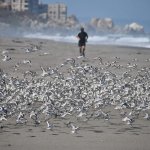


I first drafted this editorial in Cordova, Alaska, while watching Black Oystercatchers (Haematopus bachmani) against a backdrop of the Orca inlet. I was visiting the Copper River Delta Shorebird Festival, a celebration of shorebirds held every year since the designation of the Copper River Delta as a WHSRN site in 1990. The festival marks their spring arrival, as the extensive mudflats of the Copper River Delta become engulfed in wave after wave of a frenzy of bright colors, as millions of shorebirds in fresh breeding plumage jostle to refuel and rest after their long migrations, before moving on to their breeding grounds on the Arctic tundra. For a brief window, shorebirds are everywhere; even the Least Sandpipers (Calidris minutilla) take over the few roads around the town.
Visiting the Copper River Delta and the shorebird festival is a privilege and an inspiration, an example of the critical role of local stewardship in ensuring the future of shorebird migrations for generations to come. While we increasingly seek to understand the value of shorebirds in terms of economic, ecosystem and human health benefits, witnessing shorebird migration at the Copper River is a reminder of their intrinsic value, of the beauty of the birds themselves, of their awe-inspiring feats of migration, and how they connect local communities and cultures throughout the Americas.
In this issue of the newsletter, we highlight further examples of one of the strengths behind WHSRN: the value of shorebirds to connect people, knowledge systems, and local actions at different scales. Hopefully this year you’ll have the chance to join a shorebird festival, or maybe we will see you at the Copper River next May!
Cover photo: Least Sandpiper. Photo: Alan Kneidel.