

The Western Hemisphere Shorebird Reserve Network (WHSRN) welcomes Bahía San Julián, in the province of Santa Cruz, Argentina, as Site 127, designated under the category of Regional Importance.
Bahía San Julián encompasses approximately 43,428 acres of coastal and marine environments in southern Patagonia, Argentina. The site includes sandy and muddy beaches, extensive intertidal flats, saltmarshes, rocky shore platforms, gravel banks, and subtidal areas that provide essential habitats for numerous bird and marine species. Within the proposed area lies the Important Bird Area SC16 (IBA SC16), as well as several provincially and nationally protected zones. A portion of the site is located within the Makenke Interjurisdictional Marine Park, jointly managed by the Government of Santa Cruz Province and the National Parks Administration.
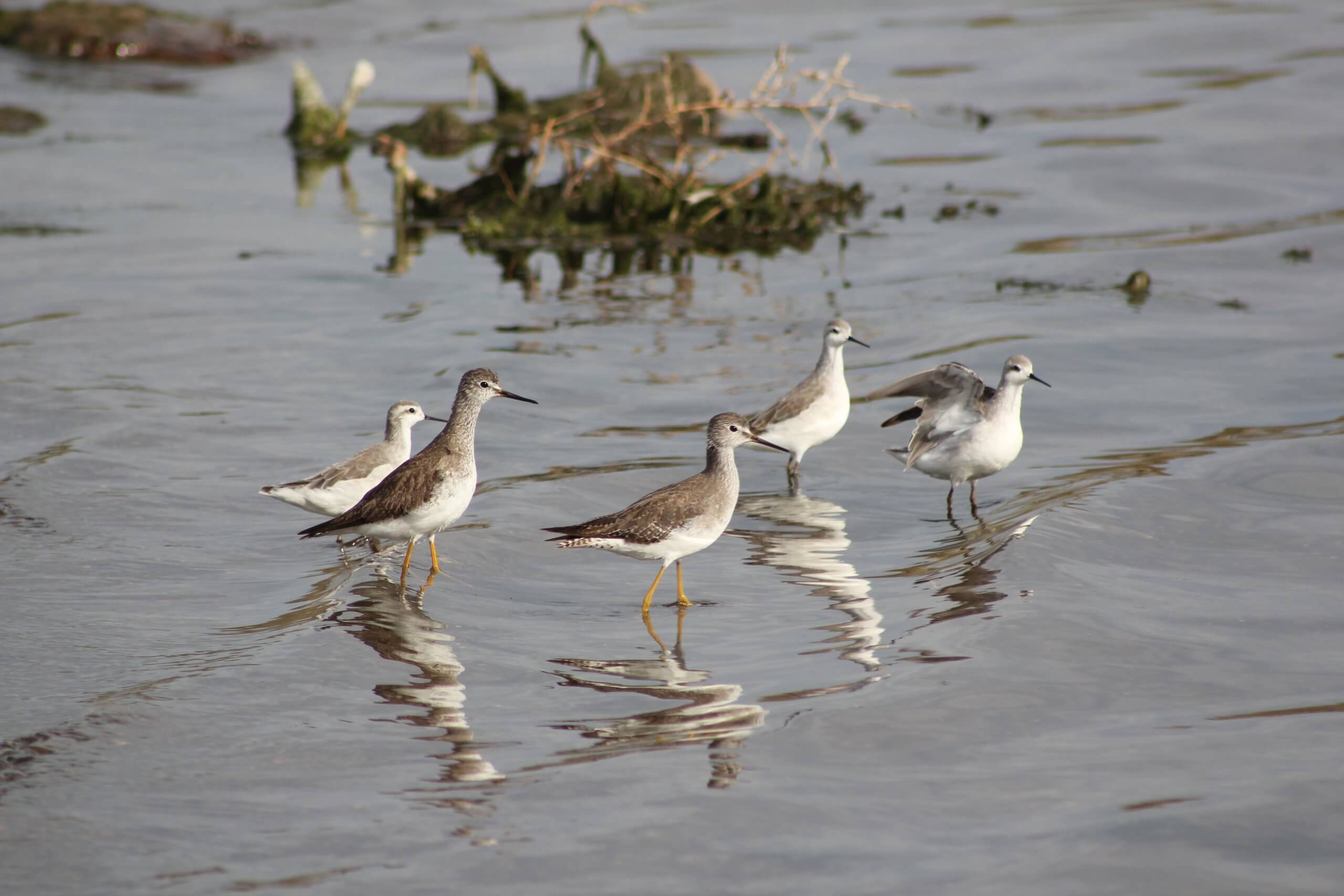
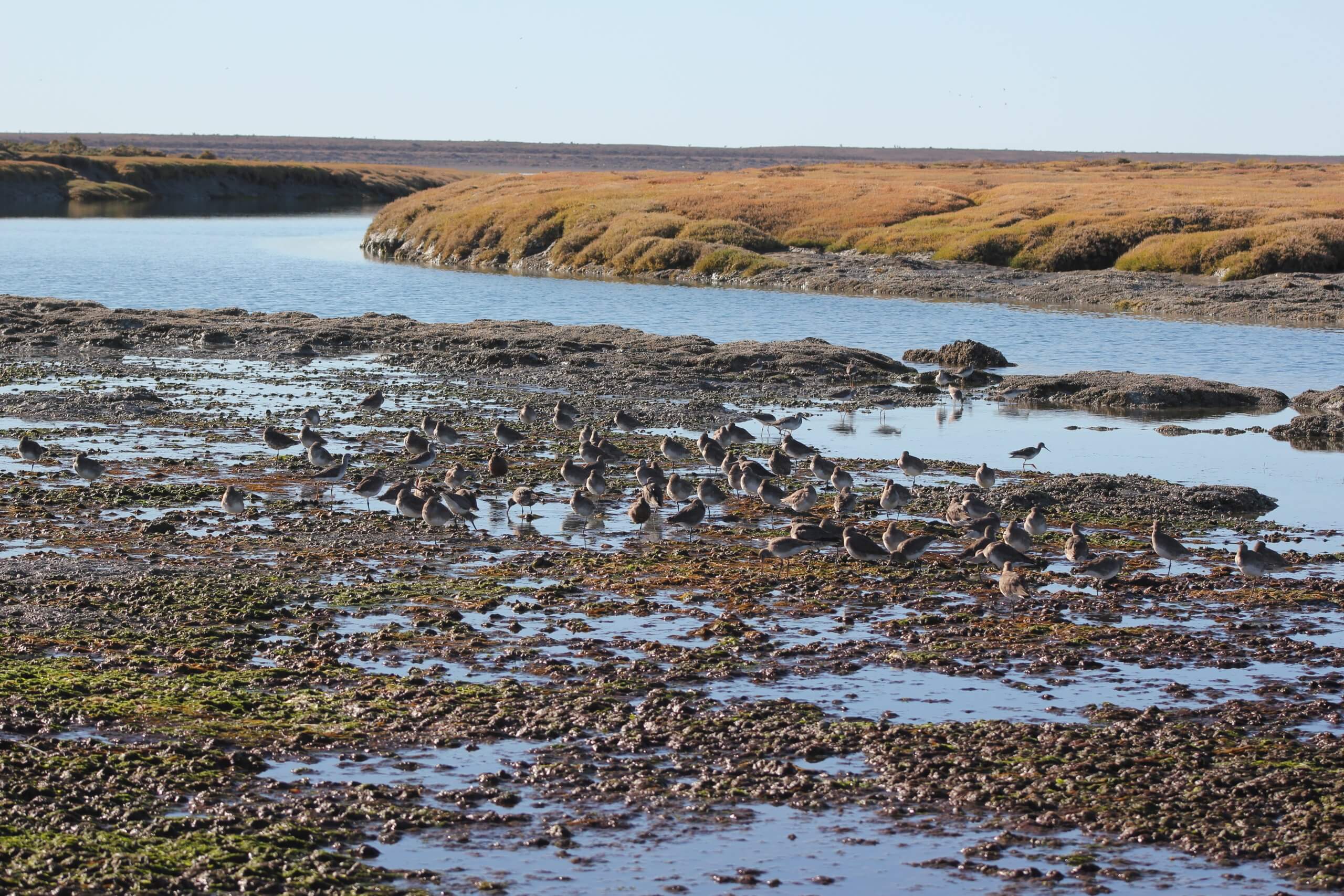
The site regularly supports more than 1% of the biogeographic population of three Patagonian shorebird species.
Photo: Ian Walker.
The WHSRN designation is based on the bay’s significance for the conservation of resident and migratory shorebirds. The site regularly supports more than 1% of the biogeographic population of three Patagonian shorebird species: the Magellanic Oystercatcher (Haematopus leucopodus), with records of up to 1,500 individuals; the American Oystercatcher (Haematopus palliatus), with 400 individuals; and the Two-banded Plover (Anarhynchus falklandicus), with 1,200 individuals. These values exceed WHSRN thresholds for Regional Importance and highlight the bay’s critical role in the conservation of these species.
In addition to its importance for shorebirds, Bahía San Julián hosts significant breeding colonies of seabirds. These include the largest colony of Red-legged Cormorant (Poikilocarbo gaimardi) in Argentina, as well as a colony of more than 44,000 pairs of Magellanic Penguin (Spheniscus magellanicus) on Isla Cormorán. The site also supports populations of marine mammals such as Commerson’s Dolphin (Cephalorhynchus commersonii), South American Sea Lion (Otaria flavescens), Southern Right Whale (Eubalaena australis), and Peale’s Dolphin (Lagenorhynchus australis).
The community of Puerto San Julián, located on the northern shore of the bay, maintains a close relationship with this ecosystem through recreational, fishing, and tourism activities. In recent years, academic institutions, conservation organizations, and local authorities have promoted environmental education initiatives, participatory monitoring, and governance strengthening to advance biodiversity conservation and the protection of shorebirds in the region.
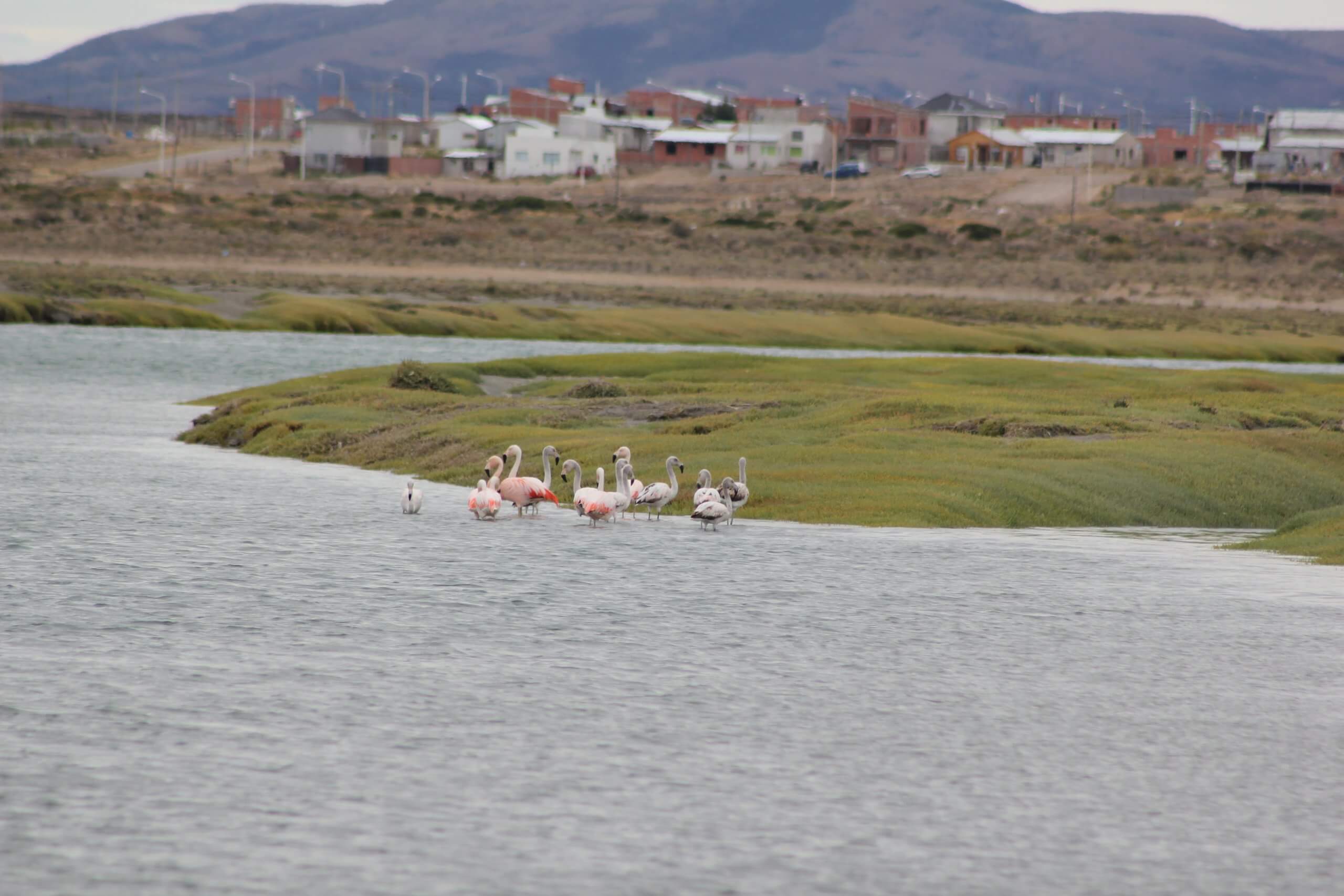
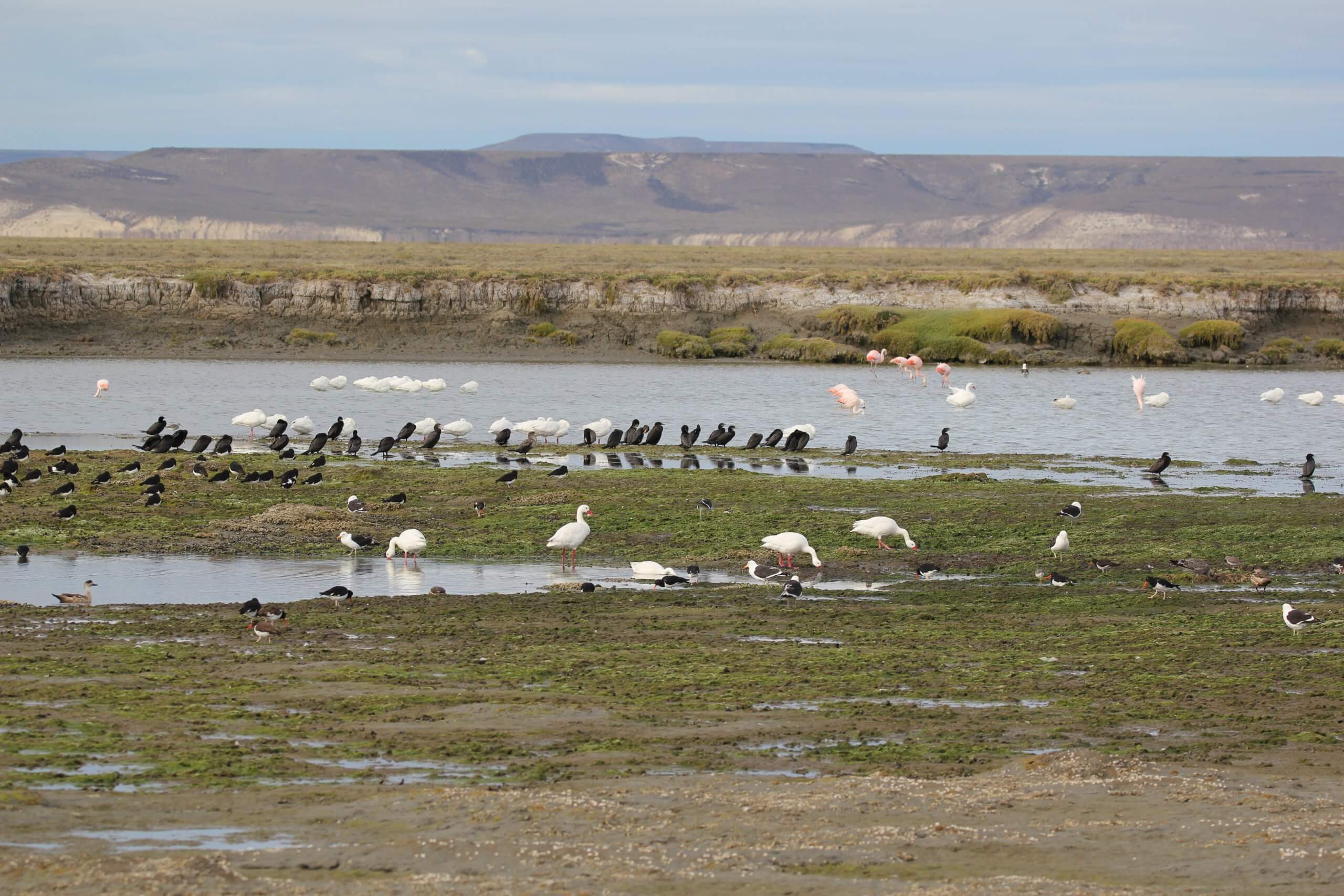
The site includes sandy and muddy beaches, extensive intertidal flats, saltmarshes, rocky shore platforms, gravel banks, and subtidal areas.
Photo: Ian Walker.
The designation of Bahía San Julián as a WHSRN site was made possible through the joint efforts of the Asociación Ambiente Sur, the National Parks Administration, the Santa Cruz Provincial Agrarian Council, the Municipality of Puerto San Julián, the Universidad Nacional de la Patagonia Austral, Unidad Académica San Julián (UNPA-UASJ), researchers, local organizations, and numerous collaborators who have contributed to the monitoring and conservation of shorebirds in Patagonia.
With this designation, Argentina now counts 13 WHSRN sites, strengthening the network of priority sites for shorebirds across the Western Hemisphere and reaffirming the value of collaboration among diverse actors to protect migratory birds and coastal wetlands of hemispheric importance.