

Across the continent’s flyways, thousands of shorebirds travel each year across distances that connect hemispheres, ecosystems, and vastly different landscapes. Along this same living map of movement and rest, birdwatching tourism is beginning to establish itself as a concrete opportunity to strengthen the link between conservation and local development.
Over the past four decades, the Western Hemisphere Shorebird Reserve Network (WHSRN) has shown that protecting critical habitats is not only an ecological task, but also a deeply human process built through relationships among people, organizations, and communities. This collaborative approach opens new possibilities for conservation to generate tangible benefits and new ways of connecting with nature.
WHSRN sites not only play a fundamental ecological role but also offer unique settings for birdwatching tourism. In this context, birdwatching stands out as a high-potential activity, attracting visitors seeking authentic experiences, encouraging longer stays, and generating demand for local services such as guiding, food, and accommodation.
Today, several WHSRN sites are incorporating birdwatching tourism as a complementary tool, capable of creating experiences where biodiversity, culture, and local communities come together.
Bird-based Tourism as a Conservation Tool in Southern Chile
From Fundación Conservación Marina, Claudio Delgado, who has coordinated conservation efforts since 2015 at the WHSRN sites Humedales de Maullín and Humedales Orientales de Chiloé, has worked to link bird and wetland conservation with tourism, as well as their recognition as Nature Sanctuaries. His research experience in shorebird ecology and migration has allowed him to see how birdwatching tourism can become a bridge between science, community, and local development.
“In recent years, bird-based tourism has gone from being an emerging activity to a concrete conservation tool, where shorebirds not only generate knowledge but also real opportunities for local communities,” Claudio explained. This process has led to important advances, such as greater social appreciation of birds and the development of economic initiatives compatible with conservation. However, it has also revealed key challenges: the need to strengthen planning, regulation, and local governance to avoid new pressures on fragile ecosystems.
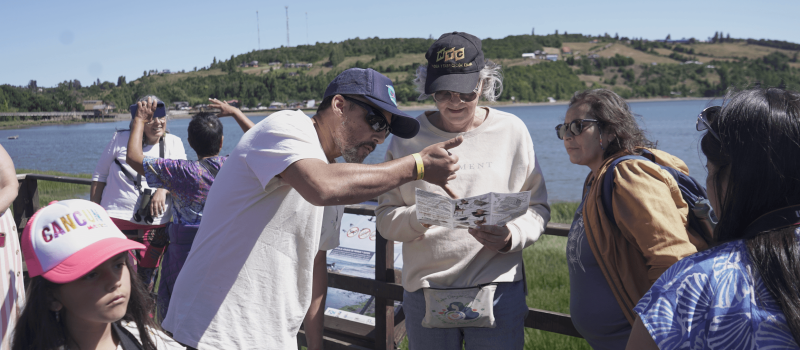
Birdwatching excursion in the Eastern Wetlands of Chiloé.
Photo: Claudio Delgado.
From Passion to Local Development in Argentina
“As a child, I always had a certain admiration for birds. Over the years, I discovered photography, began combining both hobbies, and that’s how a path began that led me to observe and study them,” says nature photographer Ezequiel Vivas.
Along that journey, meeting others who shared the same passion led him, in 2018, to begin offering birdwatching guiding services. One of the destinations that marked this path was the WHSRN site Laguna Mar Chiquita in Argentina, a place he says he fell in love with more with every visit.
In 2020, together with Gustavo Bruno, he helped develop a field guide about this wetland, which hosts hundreds of thousands of shorebirds during the austral summer, as well as the most important population of Chilean Flamingo (Phoenicopterus chilensis). The publication of the book was a personal milestone that shortly afterward coincided with the designation of a larger area, including the WHSRN site, as Ansenuza National Park.
“A few years ago I decided to move to Ansenuza due to the growing demand generated by birdwatching tourism. I also joined the NGO Aves Argentinas, where I conduct shorebird monitoring and counts, allowing me to discover new experiences. Protecting this place means protecting the birds I enjoy so much observing.”
– Ezequiel Vivas.
Stories like Ezequiel’s in Ansenuza also reflect an increasingly valued dimension: the well-being generated by contact with nature. Recent research suggests that activities such as birdwatching may help reduce stress, strengthen attention, and support cognitive health as people age. In an increasingly fast-paced world, these experiences offer a pause to reconnect with nature and with oneself.
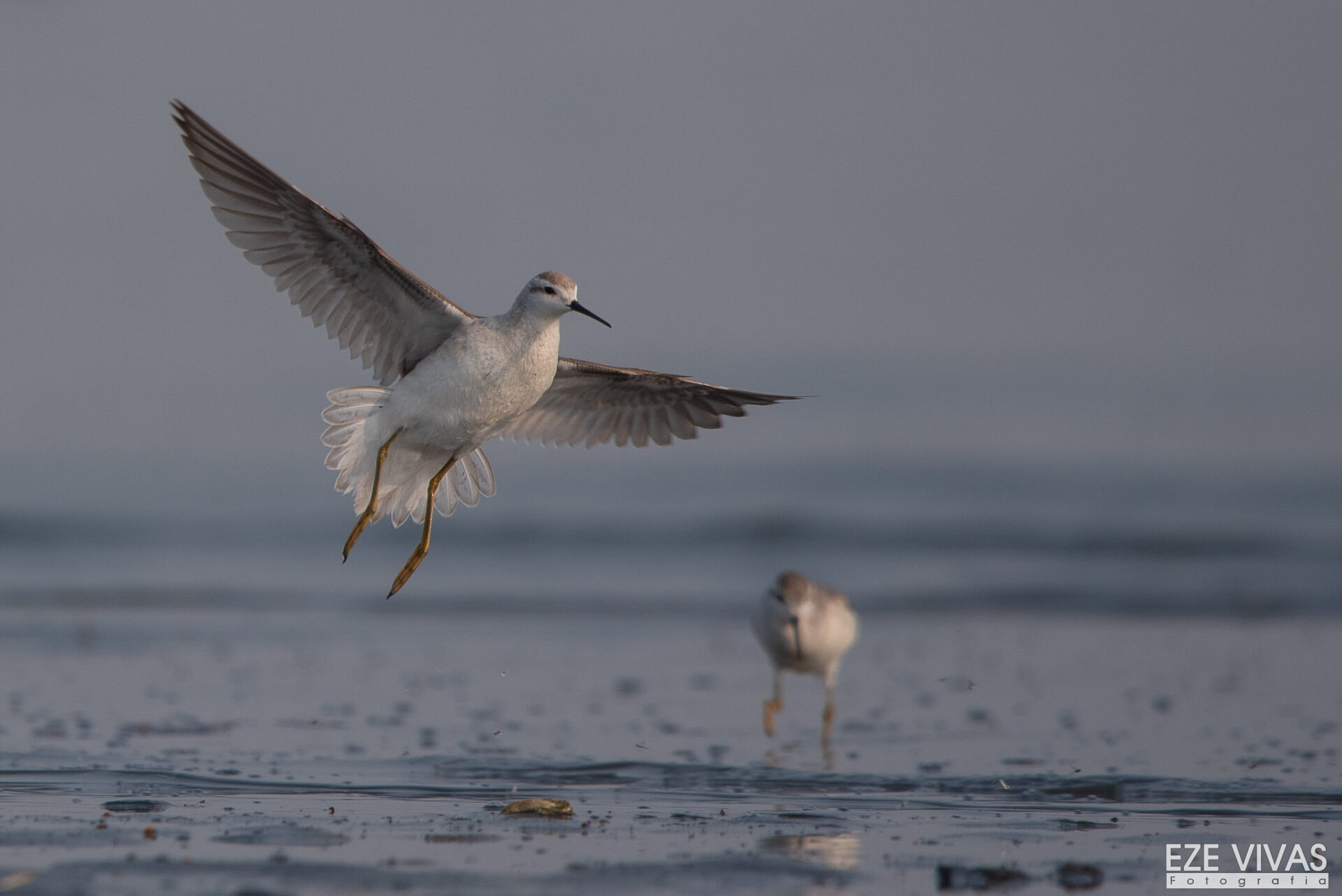
Wilson’s Phalarope (Phalaropus tricolor)
Photo: Ezequiel Vivas
Bird-based Tourism in Paraguay
In Paraguay, this potential is also reflected in personal trajectories and collective experiences that have accompanied the growing interest in birdwatching. Between 2010 and 2011, during an event in Asunción, a small leaflet titled Birds of Asunción – Mini Guide came into my hands. That simple yet inspiring material sparked a curiosity that, over time, became a starting point in my professional path in conservation.
Years later, that interest translated into coordinating the first birdwatching tourism course in the country, held in three cities (Asunción, Alto Verá, and Itapúa) and implemented by Guyra Paraguay. One of the most meaningful lessons from that experience was discovering how birds can bring together very different people: students, teachers, and curious individuals from diverse backgrounds found in birdwatching a new way to connect with nature.
Today, that same connection is visible at the WHSRN site Bahía de Asunción, which despite facing challenges such as urban pressure, pollution, and habitat loss, continues to serve as a refuge for migratory and resident species, and a space where city and nature still meet.
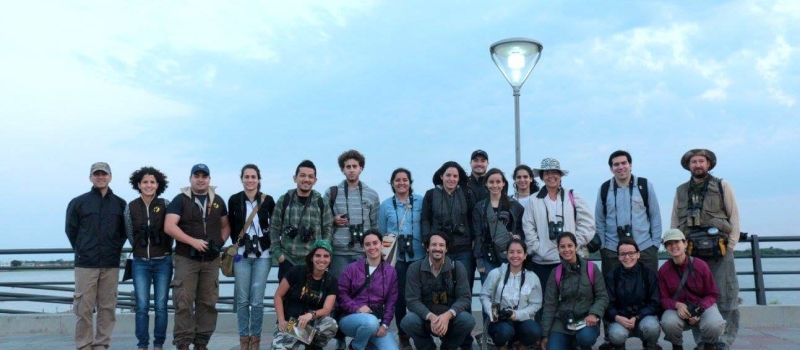
Participants in Paraguay’s First Birdwatching Tourism Course in 2015.
Photo: Nathalia Aguilar.
With a consolidated hemispheric network, WHSRN continues to open opportunities to strengthen the link between conservation, communities, and nature. Birdwatching tourism, in its many forms, from festivals and guided outings to citizen science initiatives, can become a powerful tool to support local economies, promote the value of ecosystems, and foster a culture of conservation that transcends borders.
These experiences offer a different way of relating to the landscapes we inhabit and the species that move through them. Perhaps therein lies one of their greatest values, shorebirds remind us that conservation does not happen in isolation, but in motion, connecting people, stories, cultures, and ecosystems across the continent.