

James Lowen
For over four decades, the Western Hemisphere Shorebird Reserve Network (WHSRN) has grown into a hemispheric effort based on the idea that conservation extends beyond protecting individual sites. It is about building community, strengthening local capacity, and creating lasting connections between people, institutions, and landscapes across the Americas. This collective vision reflects a fundamental reality: migratory shorebird species depend on coordinated action on a scale that mirrors their extraordinary journeys, linking local stewardship with international collaboration.
In this feature, James Lowen draws interviews with key figures from WHSRN’s early days, weaving together perspectives that span its origins, growth, and future. The resulting narrative captures the past, present, and evolving vision of the largest network of shorebird conservation sites in the Americas.
The resulting narrative captures the past, present, and evolving vision of the largest network of shorebird conservation sites in the Americas.
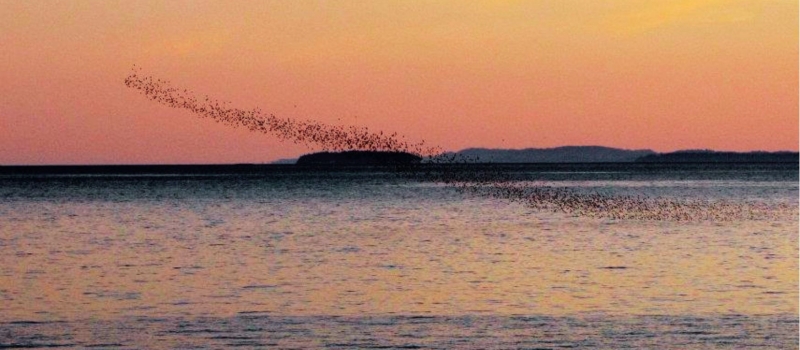
Photo: WHSRN Archives
In March 1989, a glinting metal band on the leg of a Semipalmated Sandpiper (Calidris pusilla) on the coast of Suriname confirmed what George Finney and many others had long suspected.
A Canadian Wildlife Service official, Finney was attending the designation of South America’s first three Western Hemisphere Shorebird Reserve Network (WHSRN) sites (Bigi Pan, Coppenamemonding, and Wia Wia) – an event so significant that it was honoured with a national holiday. Just eight days earlier the Semipalmated Sandpiper had been banded 4,500 km north at the Bay of Fundy on Canada’s Atlantic coast. That it was now scurrying along a South American shoreline was a sure sign that WHSRN’s aspiration to create a chain of protected areas the length of the Americas could indeed help save migratory shorebirds.
Today, WHSRN is a phenomenon. The Network comprises 126 vital sites for shorebirds, spread across 20 countries and involving 452 partners in the conservation of 39.2 million acres (15.9 million hectares) – an area bigger than Suriname. It is an impressive suite of numbers for a conservation strategy first suggested over 40 years ago.
Guy Morrison, Canadian Wildlife Service, had been working on shorebird distribution for nearly a decade, identifying key areas for them in Canada. Other people had similar aspirations. In 1974, Brian Harrington, with the then Manomet Bird Observatory (now Manomet Conservation Sciences), initiated the International Shorebird Survey, to better understand the status of shorebirds in North America.
But where were the shorebirds when not in North America? There was “little information on where the shorebirds went or where the important areas were,” according to Morrison, so conservationists were keen to discover and document key sites for shorebirds in South America.
From 1982 to 1986, in what even today seems a jaw-dropping endeavour, “we basically managed to fly around the continent – 28,000 km of surveys, at a height of about 150 feet [50 meters] – and lived to tell the tale!” Initial data, Morrison continues, “showed that major proportions of different species were concentrated in relatively small numbers of key sites”.
This meant that “conservation could not be successful without protecting the chain of sites upon which the birds depended during their annual migrations”.
– Guy Morrison
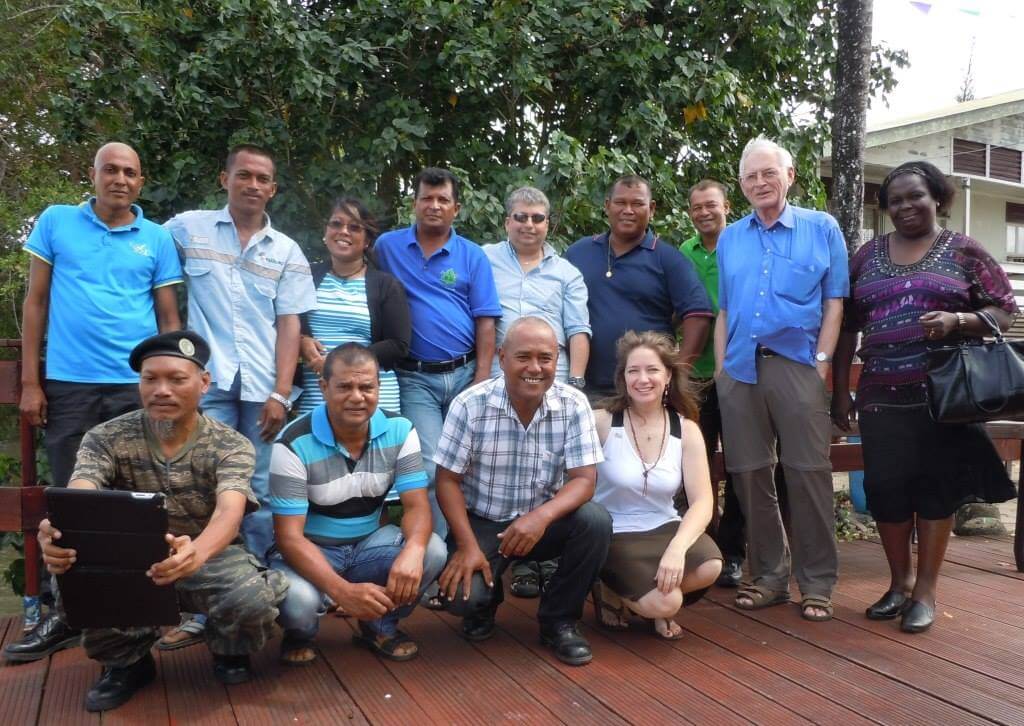
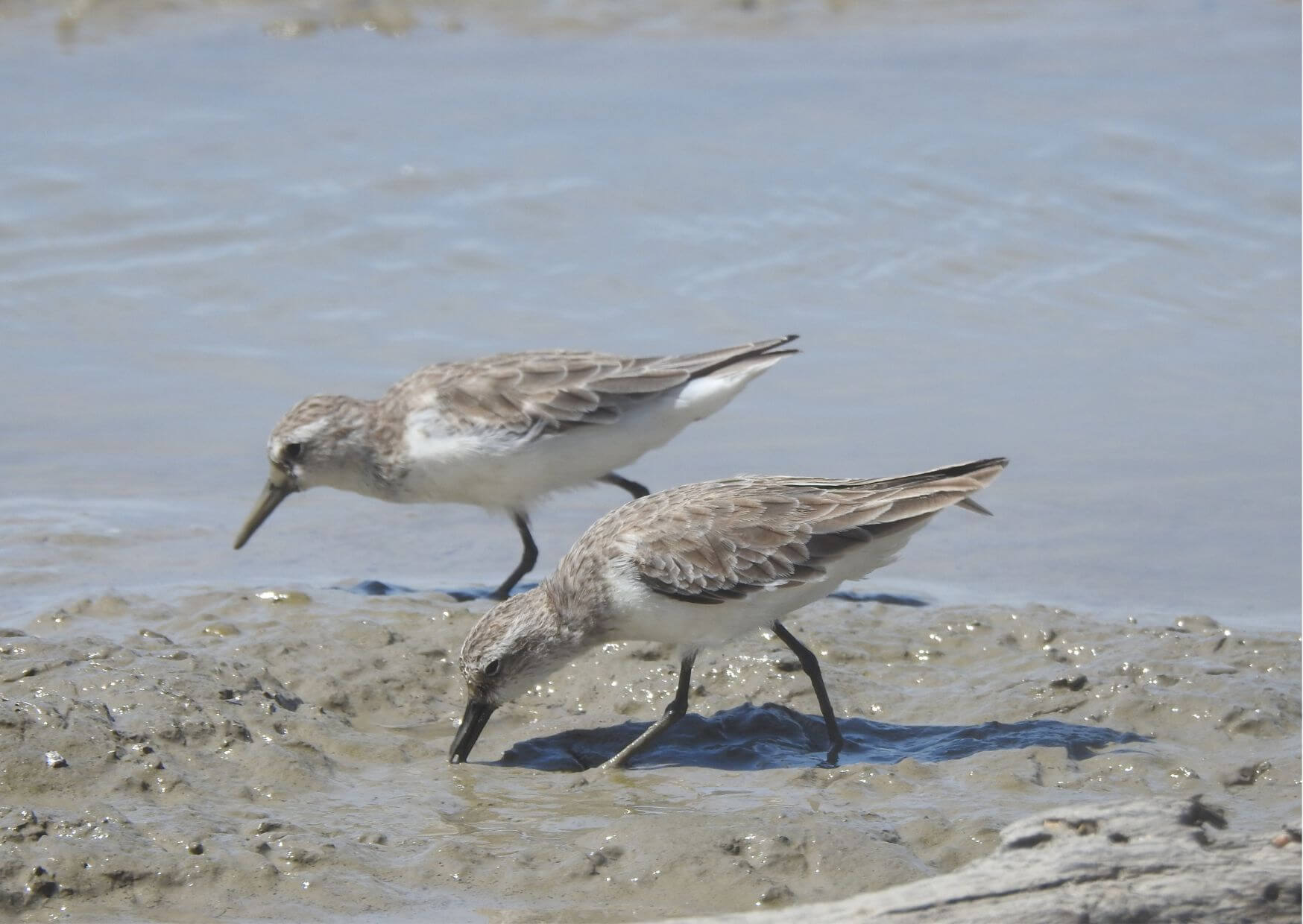
Left: Participants in the Bigi Pan Site Assessment Tool workshop included federal game wardens, fishermen, federal and district environmental educators, and a tourism operator. Photo: WHSRN Archives. Right: (Calidris pusilla). Photo: Arne Lesterhuis.
At the 1982 International Waterfowl & Wetlands Research Bureau conference, Morrison (Canadian Wildlife Service) presented “an idea that had been brewing for some time… a linked system of shorebird reserves”. Within three years, Pete Myers, then with the Academy of Natural Sciences Philadelphia, and Pete McLain, then with the state of New Jersey, were largely responsible for translating this novel approach into reality. They further developed the idea and persuaded the International Association of Fish and Wildlife Agencies to engage with World Wildlife Fund-US and advance the network. “This key step,” the duo wrote in a 1987 article alongside Morrison and Harrington, “established a unique collaboration of public and private groups… [and] …most critically, brought access to precisely the group needed for network implementation, i.e. managers making decisions about how to use wetlands”.
This development reflects two principles that underpinned the fledgling initiative – and have done so ever since. “The network,” Myers and co. explained, was to be “wholly voluntary and depend on local involvement including land and wildlife managers”. Rather than top-down command and control, the initiative was to lie with those managing and owning individual sites who wanted their lands to form part of the first hemispheric system of linked reserves protecting important shorebird habitats. Linda Leddy, Manomet’s second President, serving from 1984–2008, was a founding member of the WHSRN’s governing body, the Hemispheric Council. She recalls that Council “felt very strongly that it was key to have landowners involved and committed to WHSRN. Without that, a designation could become meaningless.”
In an era with none of the ease of today’s instantaneous, global communications – no email, Wi-Fi or WhatsApp – progress was astonishingly rapid. “Looking back,” says Rob Clay, current Director of WHSRN Executive Office, “building a network of sites through ‘snail mail’ was a particularly ambitious concept”. Within two years, 90 sites had been identified as meeting either ‘hemispheric’ or ‘regional’ thresholds for WHSRN nomination.”.
Even at an early stage, there was more to WHSRN’s concept of a ‘network’ than sites. It meant people too. Leddy recalls that the biggest take-home message from international shorebird research in the early 1980s was that “people working at local sites didn’t have the strategic, political, marketing and financial support needed to deliver sustained shorebird research and conservation. And, for the most part, they had little connection with people doing similar work in other places.” By focusing international attention on local challenges, WHSRN would become a “one-stop connection for conserving shorebirds”.
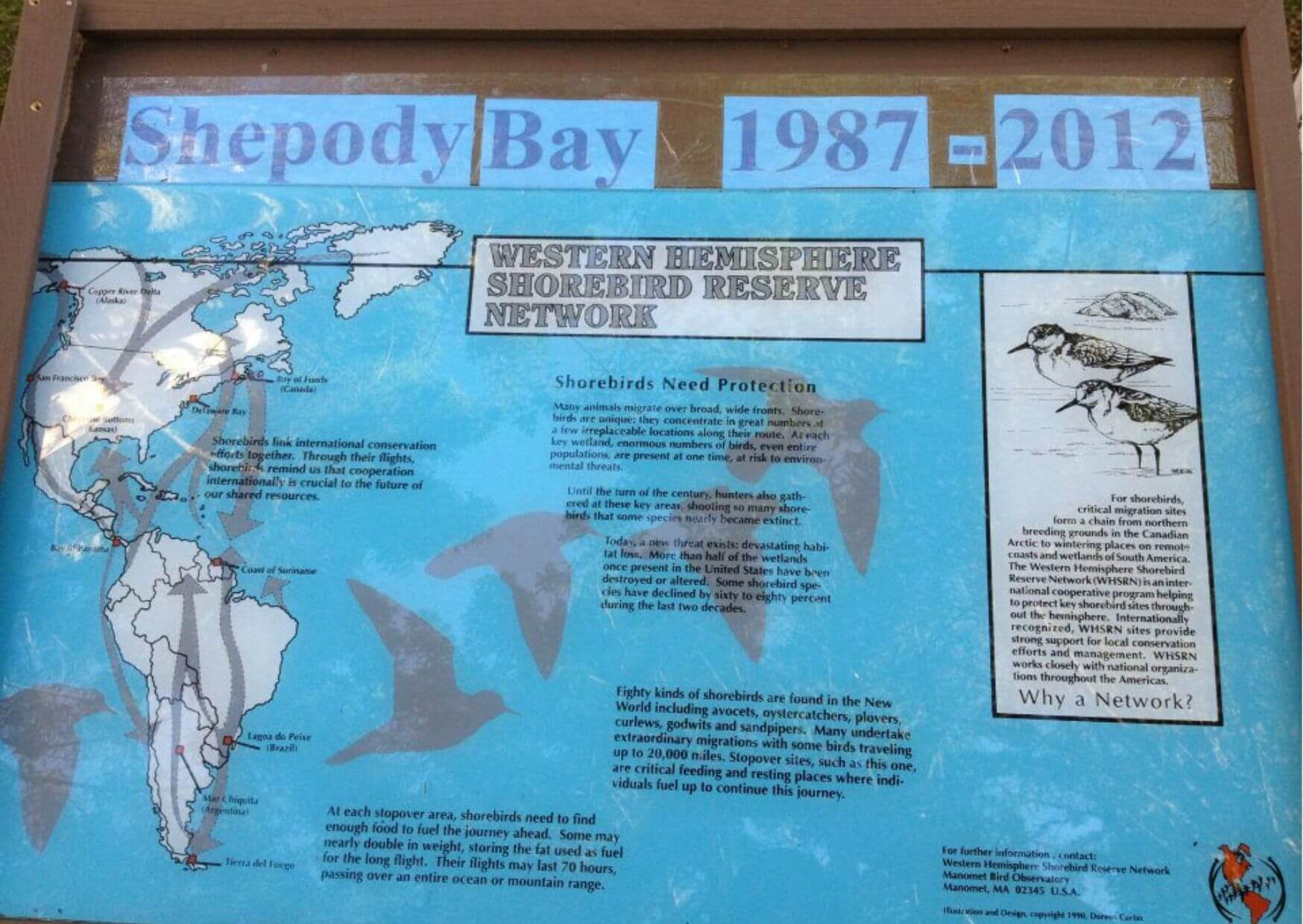
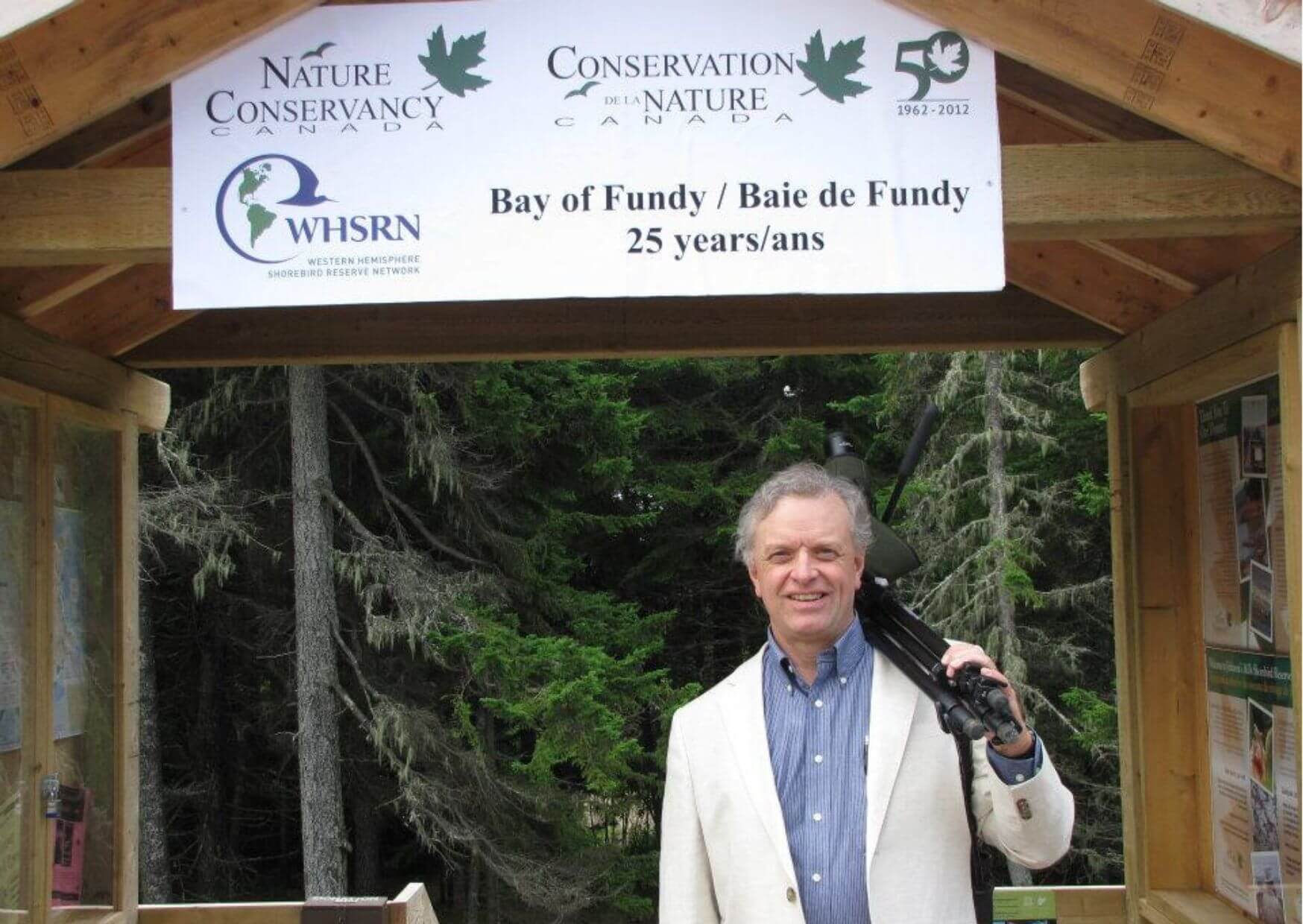
Left: The Bay of Fundy was Canada’s first WHSRN site and the second in the network. Right: Dr. Charles Duncan, former Director of the WHSRN Executive Office.
Photo: WHSRN Archives
The need for connectivity between north and south became abundantly clear in the late 1980s and 1990s. The year that South American sites first entered WHSRN (1989) was marked also by a ground-breaking atlas of Nearctic shorebird distribution in the continent – the fruits of Guy Morrison’s flight surveys. In 1993, mindful that shorebirds alone (particularly ‘North American’ species) were unlikely to galvanise Latin American decision-makers, WHSRN sponsored the launch of the wider-reaching Wetlands for the Americas, which soon evolved into Wetlands International (with WHSRN temporarily folded in). A series of multi-year strategic plans followed, which expanded WHSRN’s realm, particularly since the 2000s when its budget grew ten-fold.
With growth has come innumerable, wide-ranging successes. WHSRN has become what Morrison initially hoped: “a force for good in shorebird conservation”. He is particularly proud of “the network’s expansion throughout the ranges of shorebirds”. WHSRN now encompasses nearly all the key sites required by species of conservation concern such as Red Knot (Calidris canutus) (of the subspecies rufa), Buff-breasted Sandpiper (Calidris subruficollis) and Hudsonian Godwit (Limosa haemastica), and at least one site for all North American-breeding species of high conservation concern and at least one site for all North American-breeding species of high conservation concern.
With success there is also complexity. Successive Councillors and Directors have strived to preserve WHSRN’s distinctiveness and to ensure it complements rather than competes with other conservation designations such as the Convention on Wetlands (Ramsar) and BirdLife International’s Important Bird and Biodiversity Areas. During Leddy’s directorship, “the biggest institutional issue was stabilising – financially and physically – the WHSRN Executive Office”. Clay identifies a pressing need to “put the network in the Network”, such that WHSRN comprises not just “a network of sites but networking between sites”.
An even bigger challenge, Clay continues, “concerns connecting local to global, and global to local. This is partly why we have invested in supporting flyway-scale initiatives and the Convention on Migratory Species.” Through such approaches, he explains, “we can use local experiences and challenges to inform hemispheric or global-scale efforts, and help step down the global to the local, such as through developing national shorebird conservation plans.”
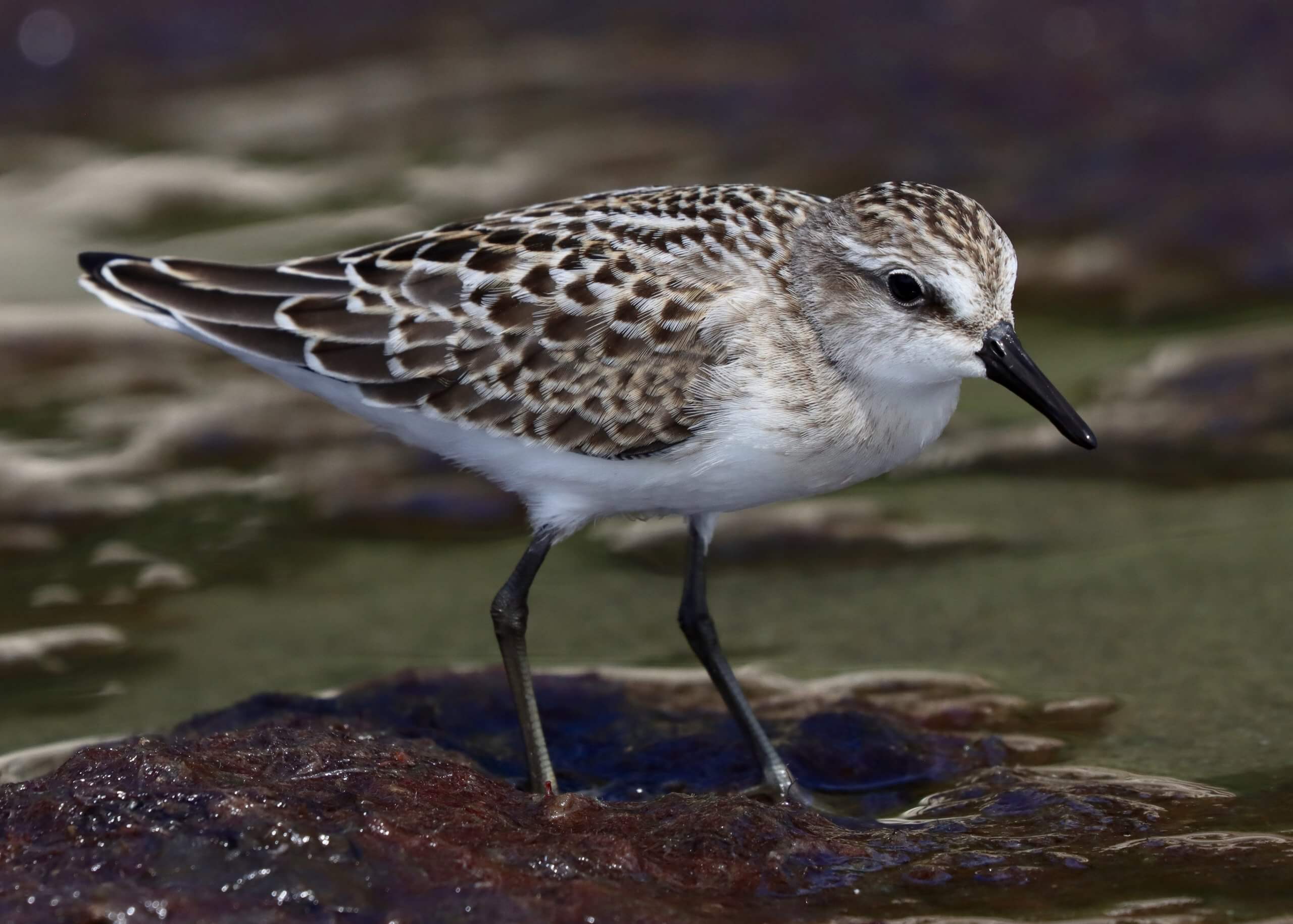
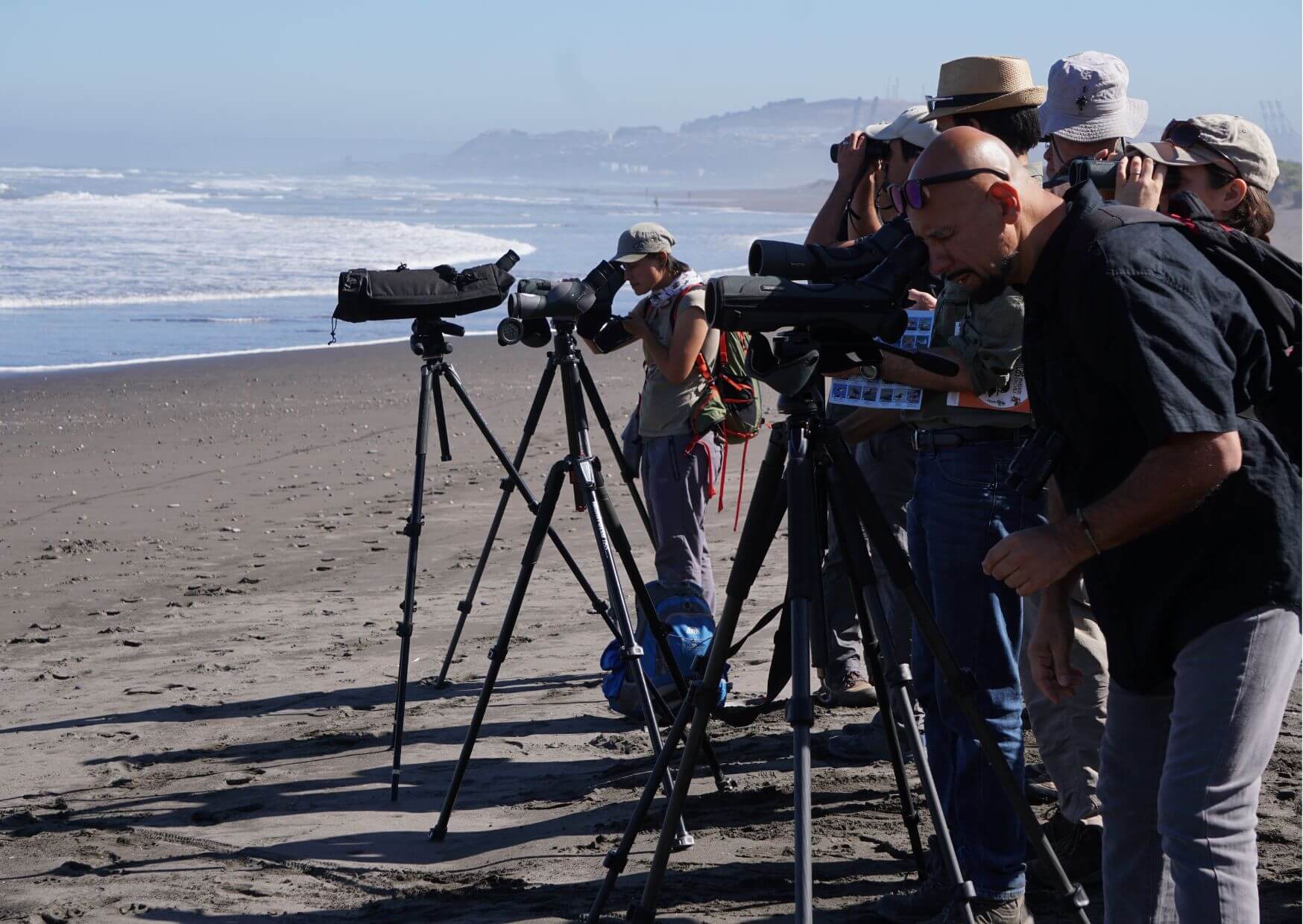
Migratory shorebird species depend on coordinated action on a scale that mirrors their extraordinary migratory journeys.
Photos: Maina Handmaker, Brad Win
However complicated and uncertain the future may be, several things are clear. First, WHSRN has stood the test of time. Its original mission – “a network of sister reserves” – is as relevant today as it was during the 1980s. Second, there remains a hearty appetite for network expansion. A quarter-century after Guy Morrison’s assessment, Canadian conservationists recently identified a remarkable 59 locations in the country that potentially qualify as WHSRN sites – many more than the seven that already established. Third, WHSRN’s approach of building capacity at sites while fostering collaborations between sites and across borders will, says Clay, “only become more relevant as a means to deliver shorebird conservation at the scale required to really make a difference”.
This year marks the 40th anniversary of the designation of the first WHSRN site, Delaware Bay, USA, on 19 May 1986. By the time of the 50th anniversary, Clay’s goal is that “all shorebirds in the Americas for which a site-based approach is appropriate are well represented within the network, with sites being managed for the benefit of both birds and people”. With this will also come those moments that bring Clay the greatest joy. “Local people glowing with pride about the importance of their site for shorebirds or taking action to help protect and manage the area. In the long-term, this is perhaps the greatest real value.”