

For over a century, artisanal salt production has been part of the identity of communities along Honduras’ Pacific coast. Yet, it has long been considered men’s work.
I grew up surrounded by salt piles and flocks of migratory birds. I remember a phrase I heard many times as a child, often said by my father, a salt producer like my grandfather: “Salt production is not for women.” That was the moment I decided to prove otherwise.
“For many years, we were told this was not work for women. Today, we are proving that it is, and that we can produce salt while caring for nature.”
– Carmen Banegas
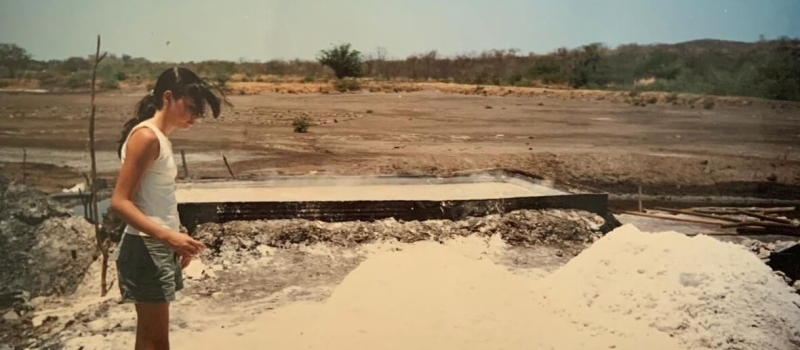
Julia as a child at her family’s salt farm. Photo: Julia Salazar
Today, I am a Specialist in Salt Production and Shorebird Conservation at Manomet Conservation Sciences and work with the Executive Office of the Western Hemisphere Shorebird Reserve Network (WHSRN). I lead initiatives that aim to integrate salt production with shorebird conservation across the Western Hemisphere. From the beginning, I knew it was essential to make women’s roles in salt production more visible. Today, I can proudly say that change is already happening.
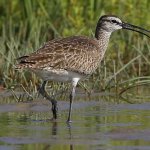
Salt farms along the Pacific coast of Honduras provide refuge for thousands of shorebirds migrating across the continent each year. These birds find in salt ponds an ideal place to rest and feed during their long journeys. What once went largely unnoticed by many producers has now become yet another reason to protect these spaces.
These efforts not only strengthen conservation at the local level but also lay the groundwork for a future WHSRN site designation, marking a gradual process that recognizes the site’s value and the commitment of its stakeholders.
“Before, we saw birds but didn’t know much about them. Now we know they come from far away and that our salt farms help them survive.”
– Delia Hernández
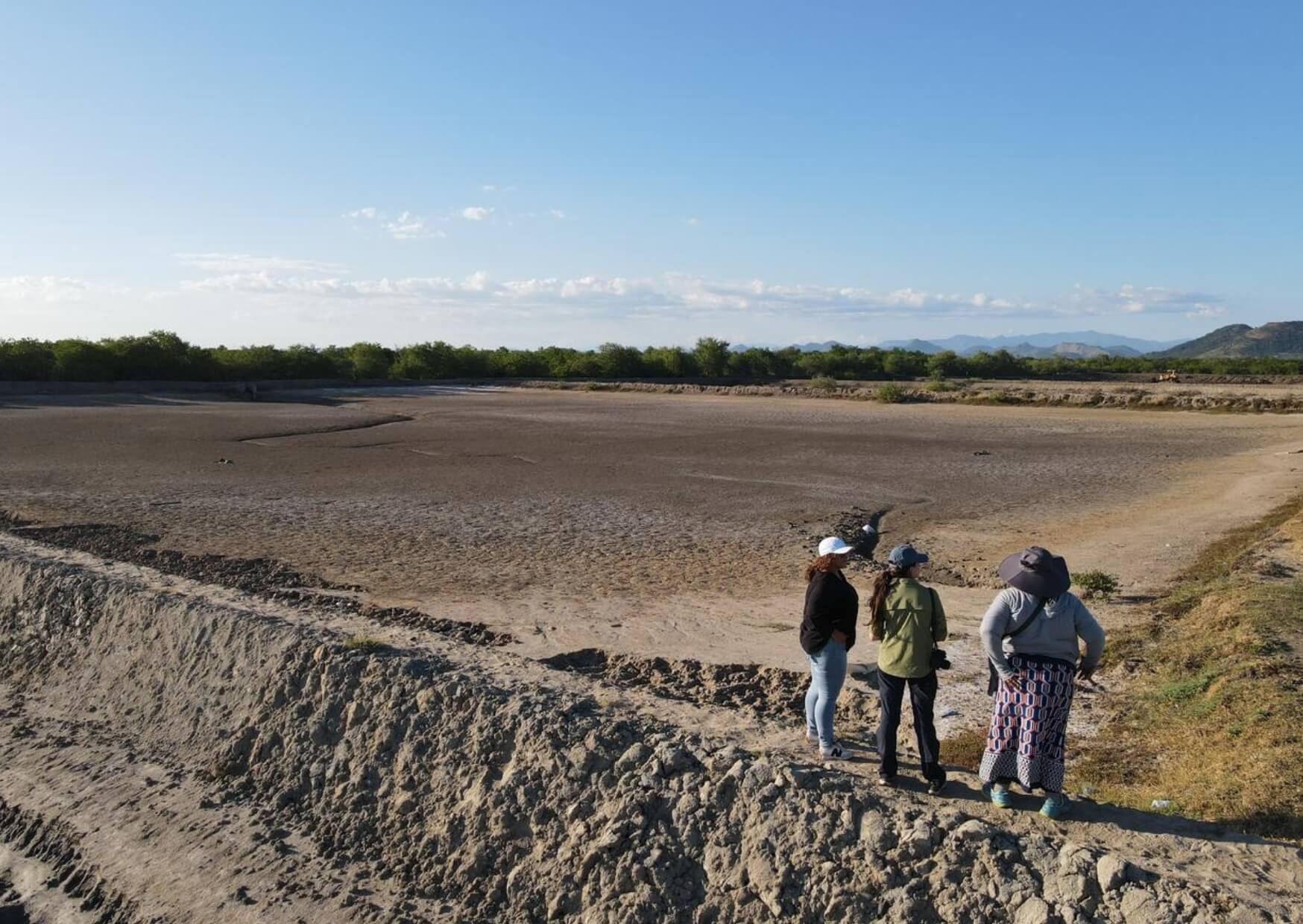
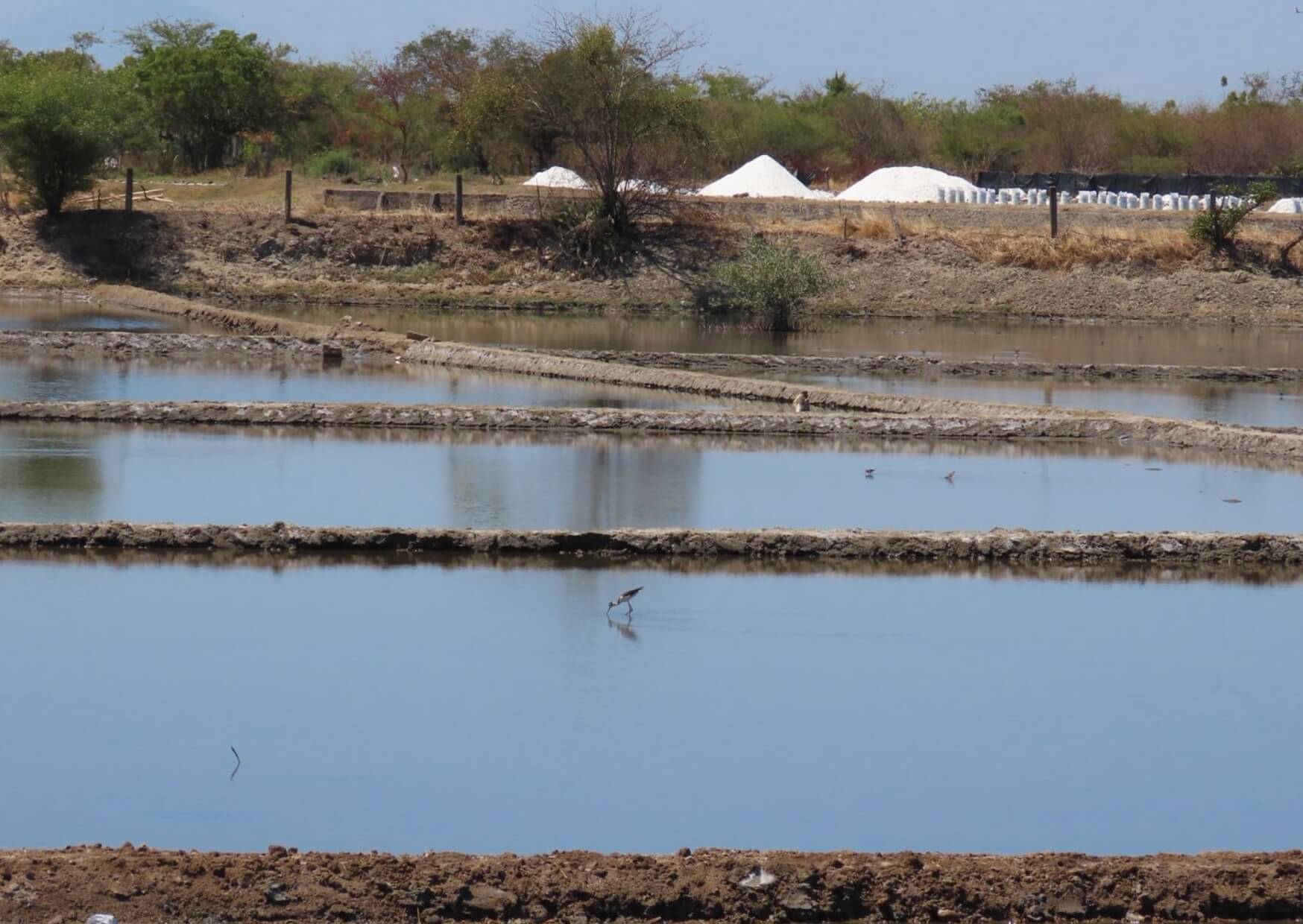
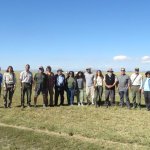
Julia with two women producers supervising salt farms, while in another image, shorebirds feed in the salt production ponds. Photo: Julia Salazar
Within the National Association of Salt Producers of Honduras (ASOPROSALH), more than 24 women are now producers, landowners, managers, and leaders in the sector. Due to labor migration, particularly among men seeking better opportunities, many salt-producing communities now rely on women, who have stepped in to meet labor demands. Many inherited salt farms from their families and chose to continue a livelihood deeply rooted in their communities’ history.
Through the project “Climate resilient salt and shorebird conservation in San Lorenzo, Honduras”, led by Manomet Conservation Sciences with financial support from the Darwin Initiative, five women producers, whose salt farms are part of the Darwin project pilot, are taking significant steps toward more climate-resilient and environmentally friendly production. They are adapting their salt farms to increase both production and quality, while also protecting mangroves and improving conditions for shorebirds. By strengthening their production systems, these women are also improving community well-being by creating job opportunities and generating fair income.
These women, and many others within the association, are now observing and documenting the birds that visit their salt farms. They take photographs, share videos, help identify species, and promote simple actions such as keeping farms clean, keeping pets away from shorebird areas, avoiding disturbances, and becoming key allies in conservation.
“Now, when the birds arrive, we feel happy. We know that if they are here, it means the salt farm is healthy.”
– Estreberta Hernández Escobar
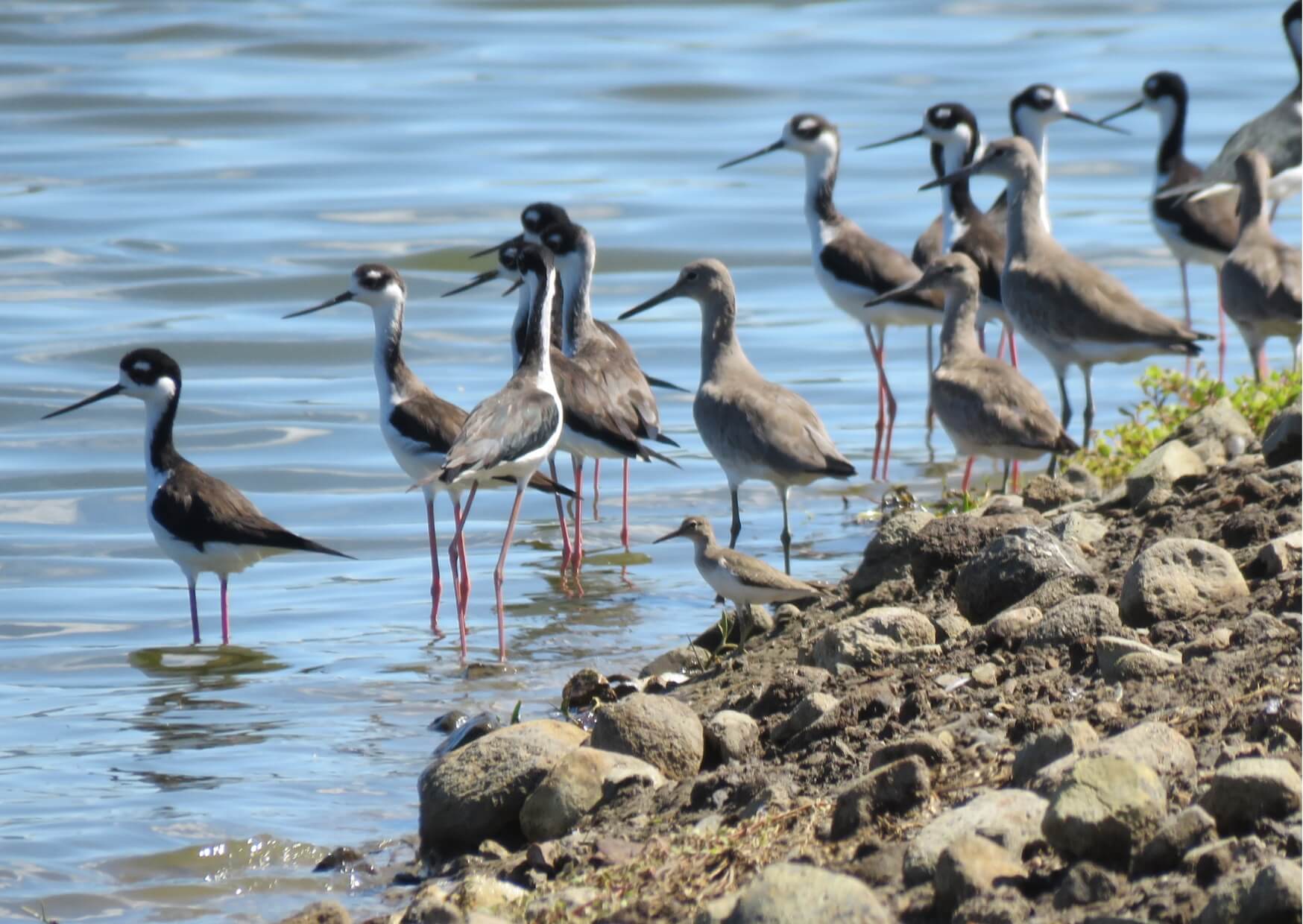
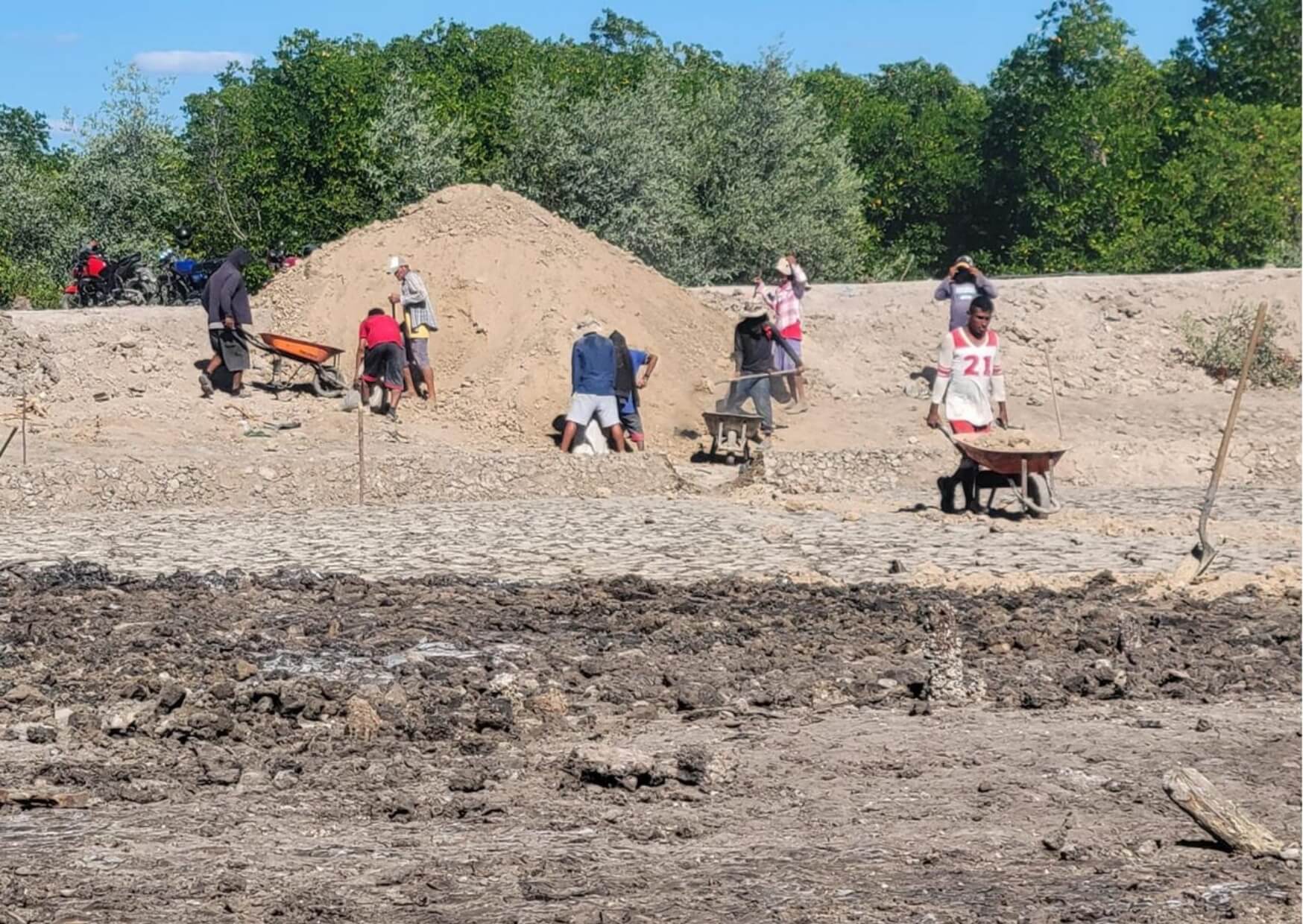
Left: Shorebirds resting along the edges of salt ponds; right:Workers building evaporation ponds (“calentadoras”) at salt farms. Photo: Julia Salazar
“Thank you for allowing me to be part of a project where nature and women’s commitment come together to conserve life. Being a woman and contributing to bird conservation is planting hope for future generations, where each protected bird is a reminder that small actions can create big change.”
– Magda Murillo
Like the birds that visit their salt ponds, these women have also learned to adapt. Today, the salt industry faces major challenges: climate change, shifting markets, and the difficulty of sustaining artisanal production. Yet these producers continue their work with resilience. In San Lorenzo Bay, where salt meets the sea, these women are writing a new story, one where tradition, conservation, and women’s leadership move forward together, and where shorebirds continue to find a place to land each year.
Listening to their voices and witnessing their leadership is deeply meaningful to me, it shows we are on the right path.
“Thank you for recognizing the women who, day after day, work to support our households. Salt production is dignified work, done with care and dedication. This project is in God’s hands. Nature is wonderful, and we’ve come to realize that shorebirds are among the most frequent visitors to our sites, we truly enjoy their beautiful colors.”
– Brenda Hernández