
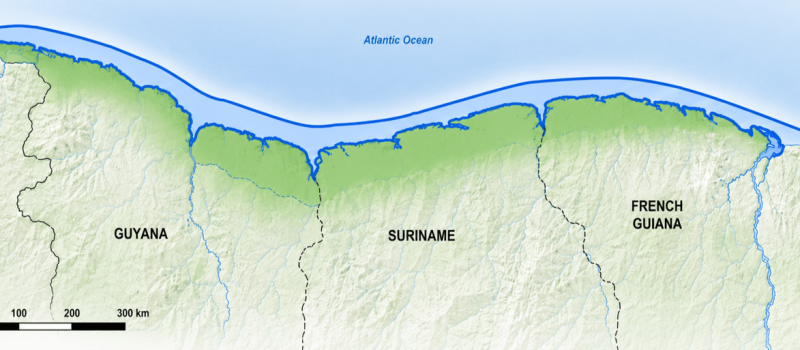
Located along the northern shoulder of South America, the Guianas Green Coast spans approximately 746 miles (1,200 kilometers) of mostly pristine coastline across Guyana, Suriname, and French Guiana. It is home to one of the world’s most extensive and intact mangrove ecosystems.
The Green Coast is a coastline in constant motion, a landscape that never stands still. The Guiana Current carries sediments from the Amazon River northwestward along the coast, creating some of the planet’s most extensive muddy tidal flats. As the shoreline erodes in some places and builds up in others, vast mudbanks migrate westward, sometimes by one to two kilometres a year.
These natural processes do not stop at national borders. This constant movement of water, nutrients and sediment connects the coastlines of Guyana, Suriname and French Guiana, and helps sustain the region’s extraordinary natural wealth. Three main habitats define the Green Coast: mangroves, mudflats and sandy beaches. Mangroves alone covered approximately 1,700 km² in 2020, while brackish lagoons, salt marshes and other coastal habitats add to this rich mosaic.
The Green Coast is of great conservation importance, supporting a rich diversity of migratory shorebirds each year.
Every year, millions of shorebirds arrive on this coast after extraordinary journeys from their Arctic breeding grounds, with some species travelling more than 20,000 kilometres. For these long distance travelers, the three Guianas form an essential link in a much larger migratory network spanning the Atlantic Flyway. The Green Coast is a vital link in their migratory journeys, providing abundant food and essential places to rest and refuel during migration, as well as to spend the non-breeding season from August through March.
A total of 47 shorebird species have been recorded along the Green Coast, including 26 migratory species from North America. Its mudflats and coastal wetlands are particularly important for species such as the Semipalmated Sandpiper (Calidris pusilla), Lesser Yellowlegs (Tringa flavipes), Black-bellied Plover (Pluvialis squatarola) and Hudsonian Whimbrel (Numenius hudsonicus).
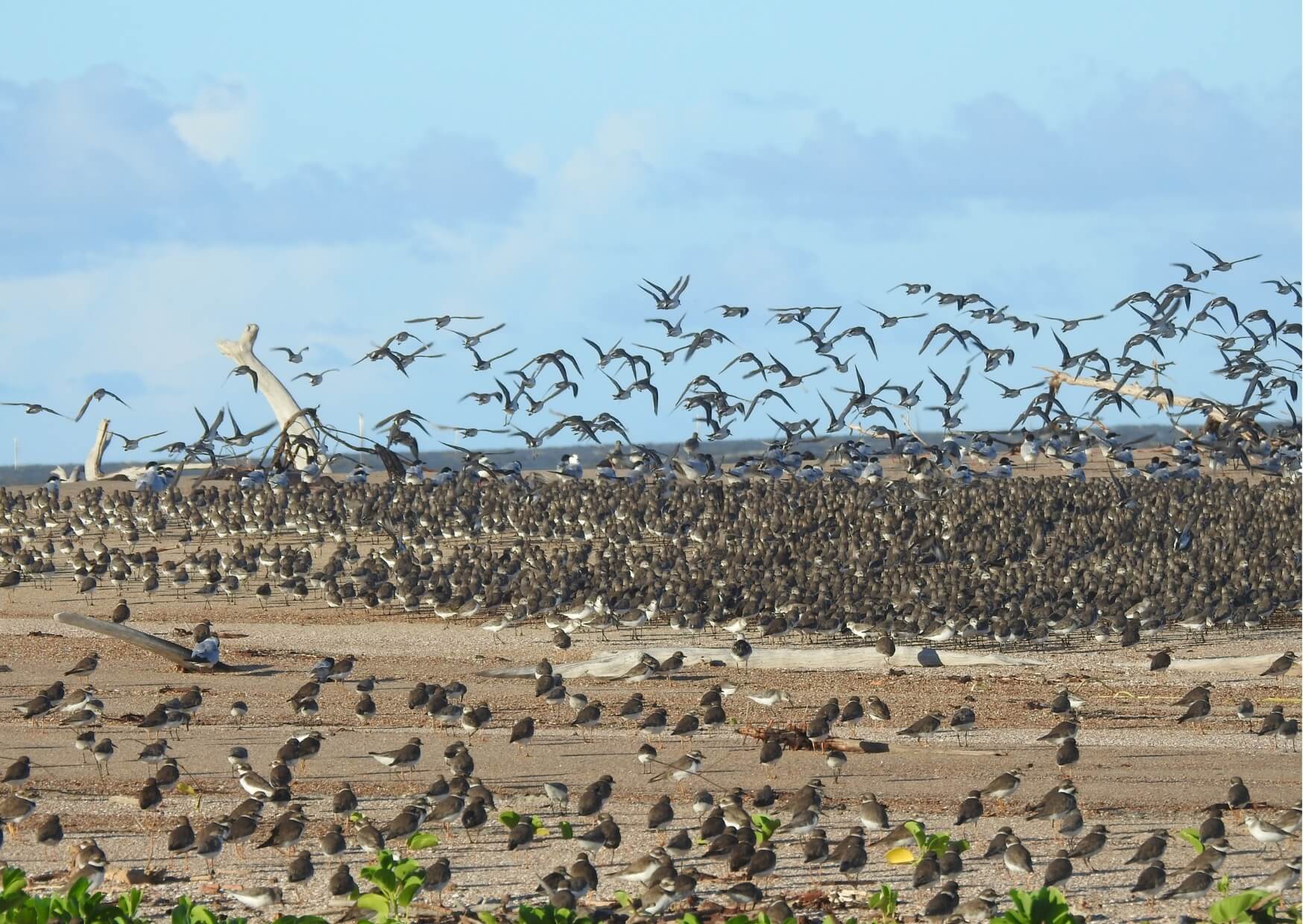
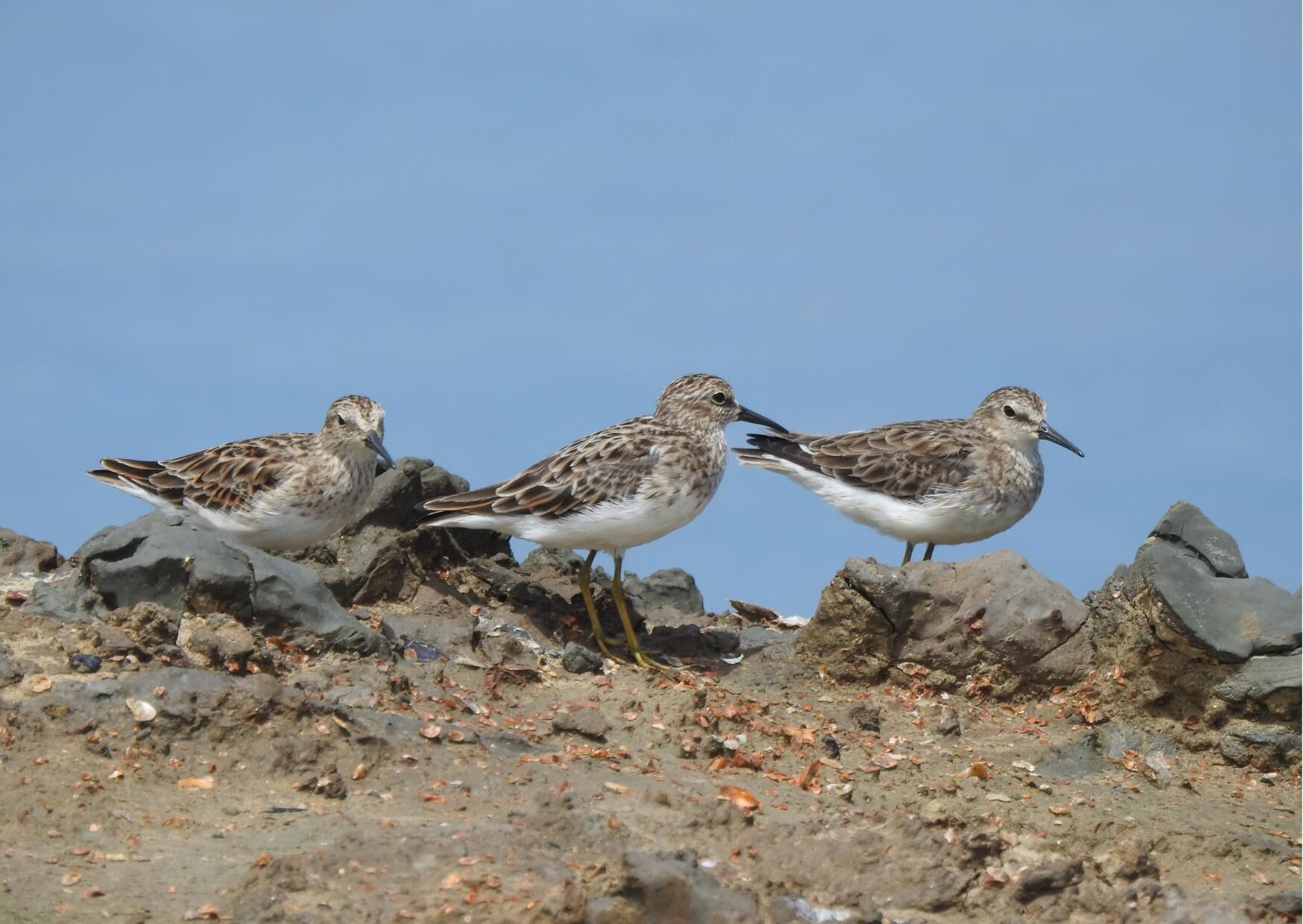
These sites support hundreds of thousands of migratory shorebirds during the non-breeding season.
Photos: Manomet/Arne J. Lesterhuis
The region already has a strong foundation for conservation, with internationally recognized Important Bird Areas (IBAs), Key Biodiversity Areas (KBAs), and Ramsar sites along the Green Coast. It is also home to three Sites of Hemispheric Importance designated by the Western Hemisphere Shorebird Reserve Network (WHSRN): Bigi Pan, Coppename Monding Nature Reserve and Wia Wia Nature Reserve ins Suriname. Designated in 1989, they were the first WHSRN Sites outside North America.
The importance of these habitats becomes even clearer as shorebird populations decline. Between 1980 and 2019, 26 of the 28 North American shorebird species assessed in a major study showed declining population trends. Of the species that regularly use the Green Coast, 13 are considered of global conservation concern, and five are listed in Appendix I of the Convention on the Conservation of Migratory Species of Wild Animals (CMS).
But the Green Coast is not just a place of extraordinary importance for wildlife. It is also home to people whose lives, livelihoods and well-being are closely tied to the coast. Between 80% and 90% of the population of Guyana, Suriname and French Guiana lives along a narrow coastal strip. Fishing, timber, honey production, small-scale agriculture and tourism support livelihoods and contribute to local economies.
These same coastal ecosystems also play a critical role in protecting communities from environmental risks. Mangroves help stabilize shorelines, reduce the impacts of storm surges, store substantial amounts of carbon, known as blue carbon, and strengthen coastal resilience in the face of sea-level rise.
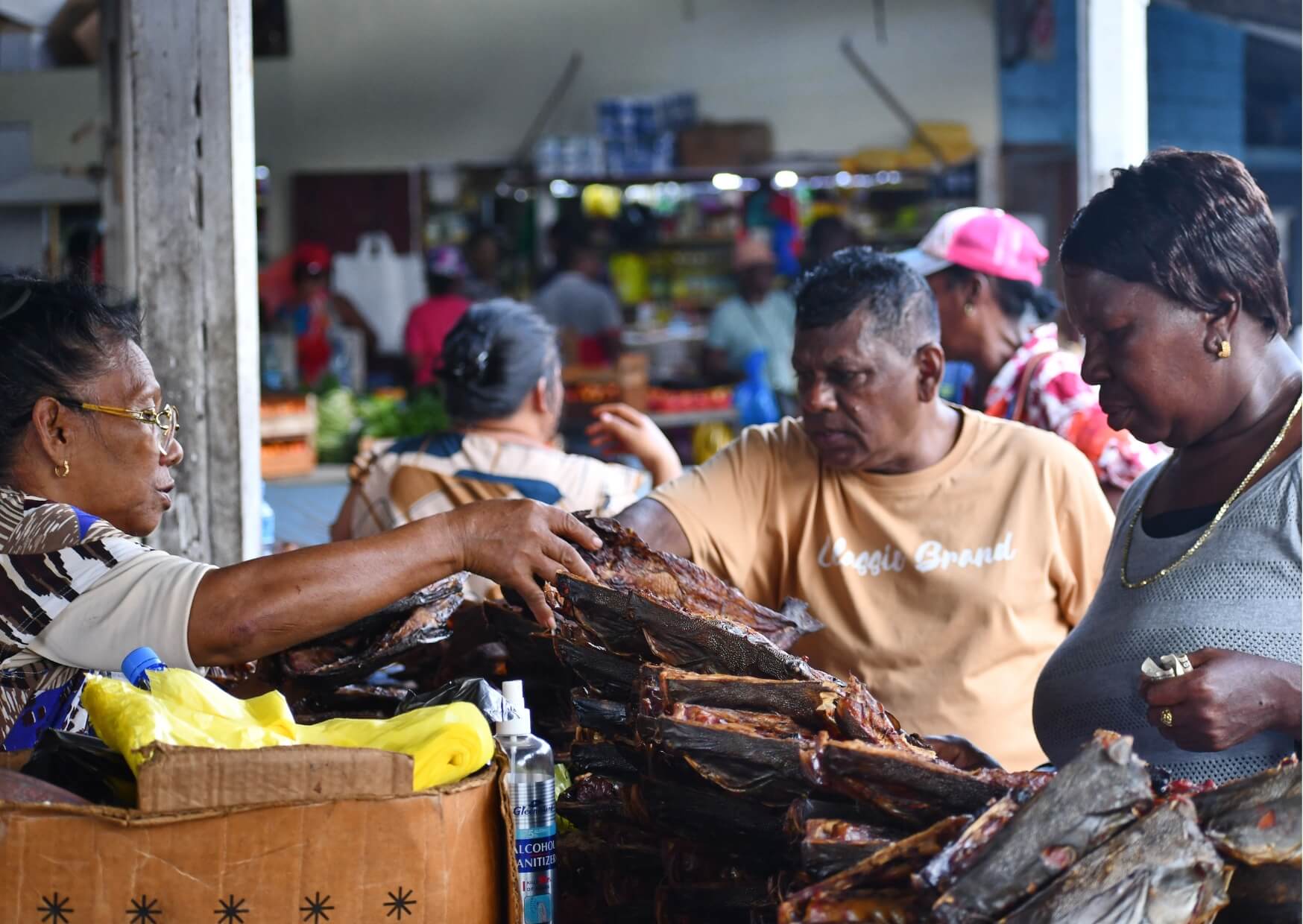
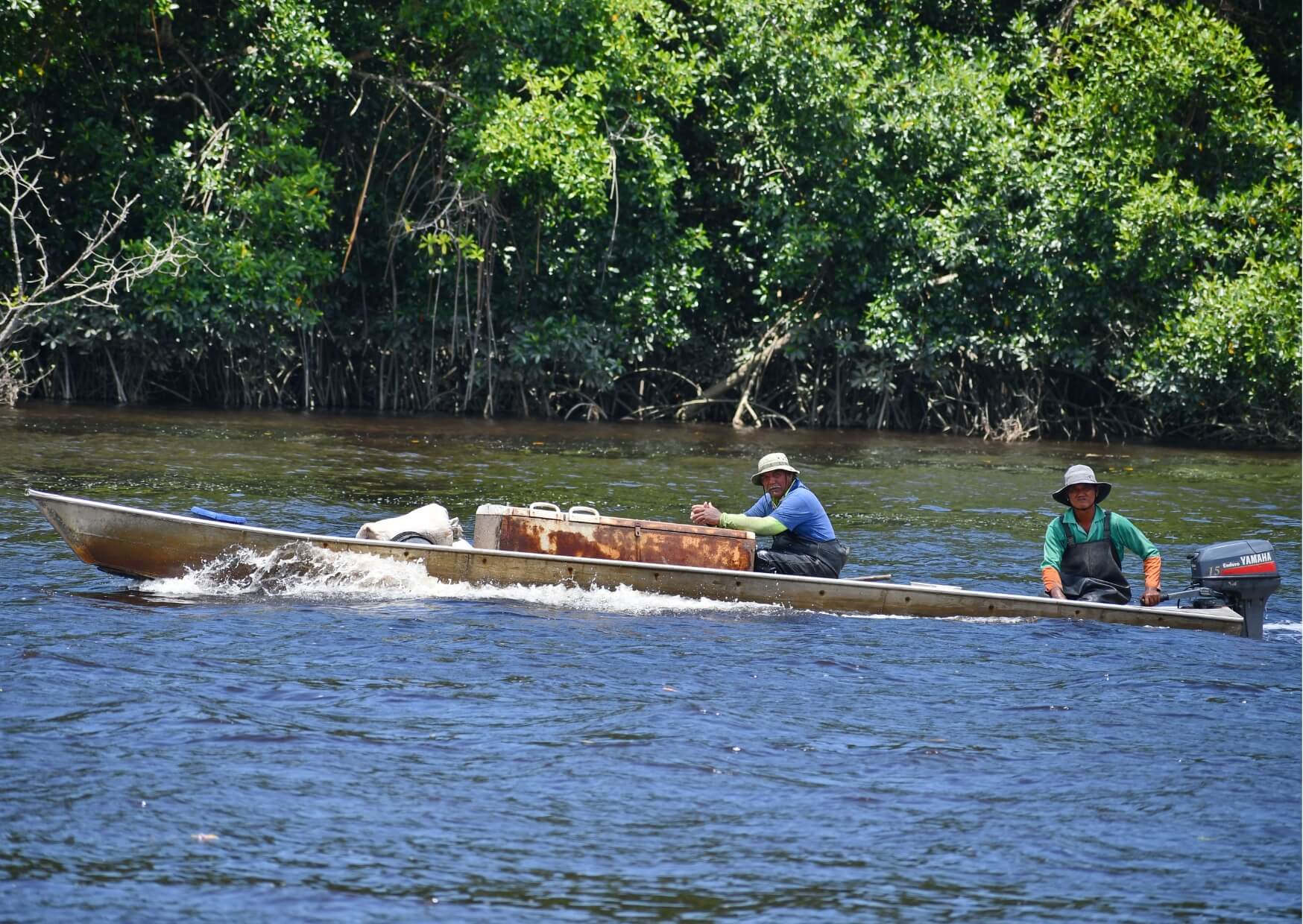
Protecting the Green Coast therefore means safeguarding biodiversity, local livelihoods and the well-being of millions of people.
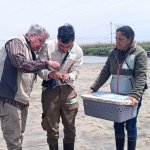
Photos: Manomet/ Diego Luna Quevedo
However, an ecosystem that connects three countries and links an entire hemisphere through the movements of migratory birds cannot be safeguarded through isolated efforts alone. Its ecological processes cross borders, and so must the conservation strategies designed to protect them. The Green Coast represents not only a shared ecological heritage, but also a shared opportunity to strengthen regional cooperation.
In early December, a Guianas Green Coast Conservation Plan will be launched, marking an important step towards a more coordinated regional approach to conservation, and opening a new opportunity for Guyana, Suriname and French Guiana to strengthen collaboration and work alongside conservation organizations, communities, scientific institutions and partners across the Americas. By bringing countries and partners together around a shared vision, the Plan aims to advance the conservation of this extraordinary coastline while supporting resilient ecosystems and coastal communities. It builds on the work already taking place in each of the three Guianas and seeks to connect these efforts, encourage knowledge-sharing and identify opportunities for collective action.
One coast. Three Nations. One shared future. Protecting the Guianas Green Coast is a shared responsibility and an opportunity to secure a healthier, more resilient future for people and nature.
Cover Photo: Manomet/Arne J. Lesterhuis