
In May 2026, I represented Manomet Conservation Sciences during a shorebird banding campaign coordinated by New Jersey Audubon at Delaware Bay, the first site designated within the Western Hemisphere Shorebird Reserve Network (WHSRN), in 1986. Behind that experience lie decades of history and a purpose that extends far beyond capturing birds: strengthening collaboration among the organizations working to conserve shorebirds along their flyways and training emerging professionals in shorebird capture and processing methods. This knowledge is essential to ensuring the continuity of shorebird monitoring across the Americas.
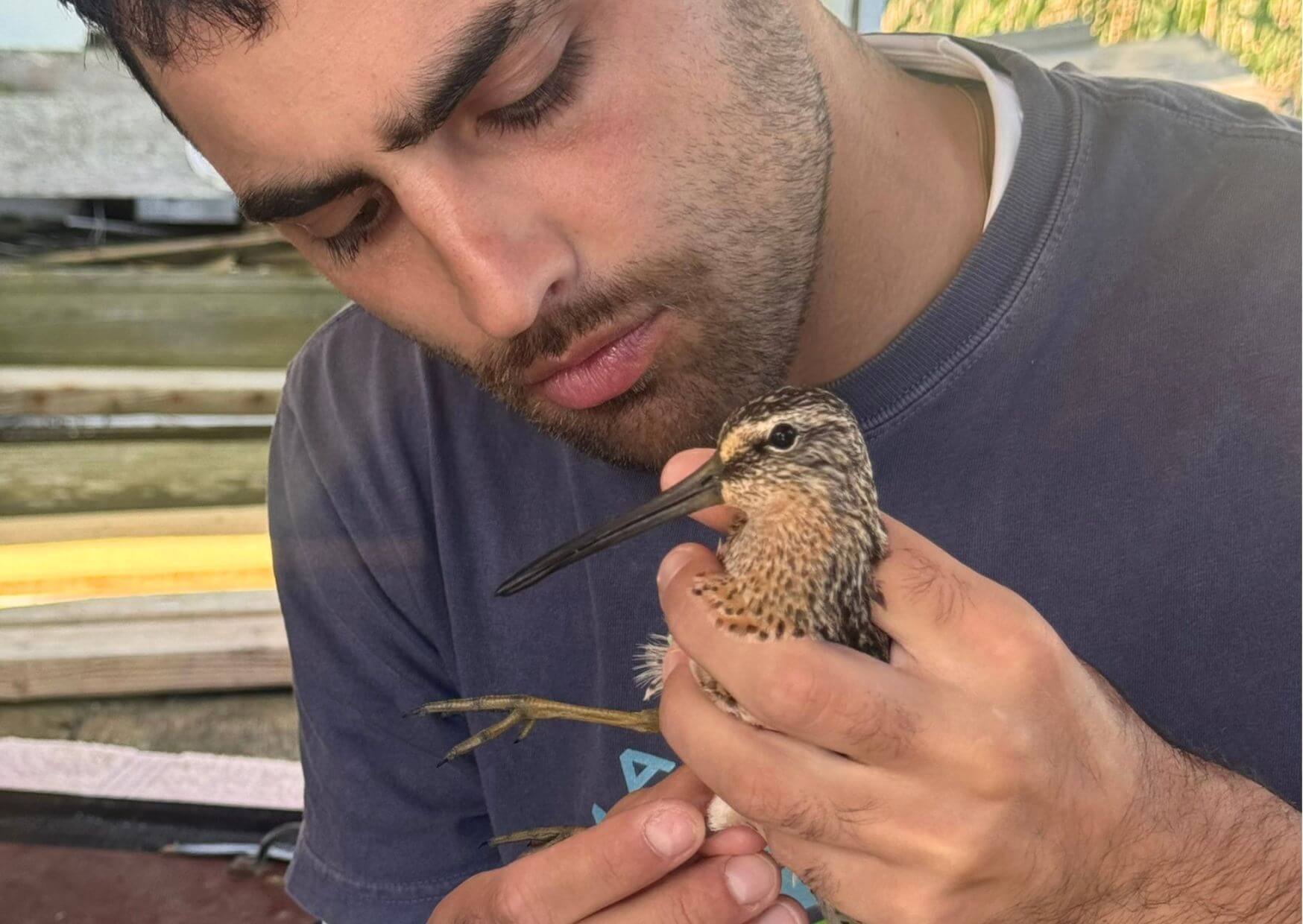
The project focuses primarily on Semipalmated Sandpipers (Calidris pusilla) and Short-billed Dowitchers (Limnodromus griseus), two species that rely on Delaware Bay as an essential stopover to rest and refuel before completing the final leg of their migration to breeding grounds in northern Canada. In recent years, the campaign has increasingly included professionals from Latin America, reflecting the understanding that migratory species can only be conserved when those of us working at different points along their journeys learn and build solutions together.
This year, the team was led by David Mizrahi and Lena Usyk, both from New Jersey Audubon, and included six professionals from across Latin America. Our main goal was to learn how to use a whoosh net, a field research tool designed to capture live birds safely. We also received training in shorebird processing so that we could apply this knowledge to our ongoing work with Wilson’s Phalaropes (Phalaropus tricolor) at saline lakes in South America.
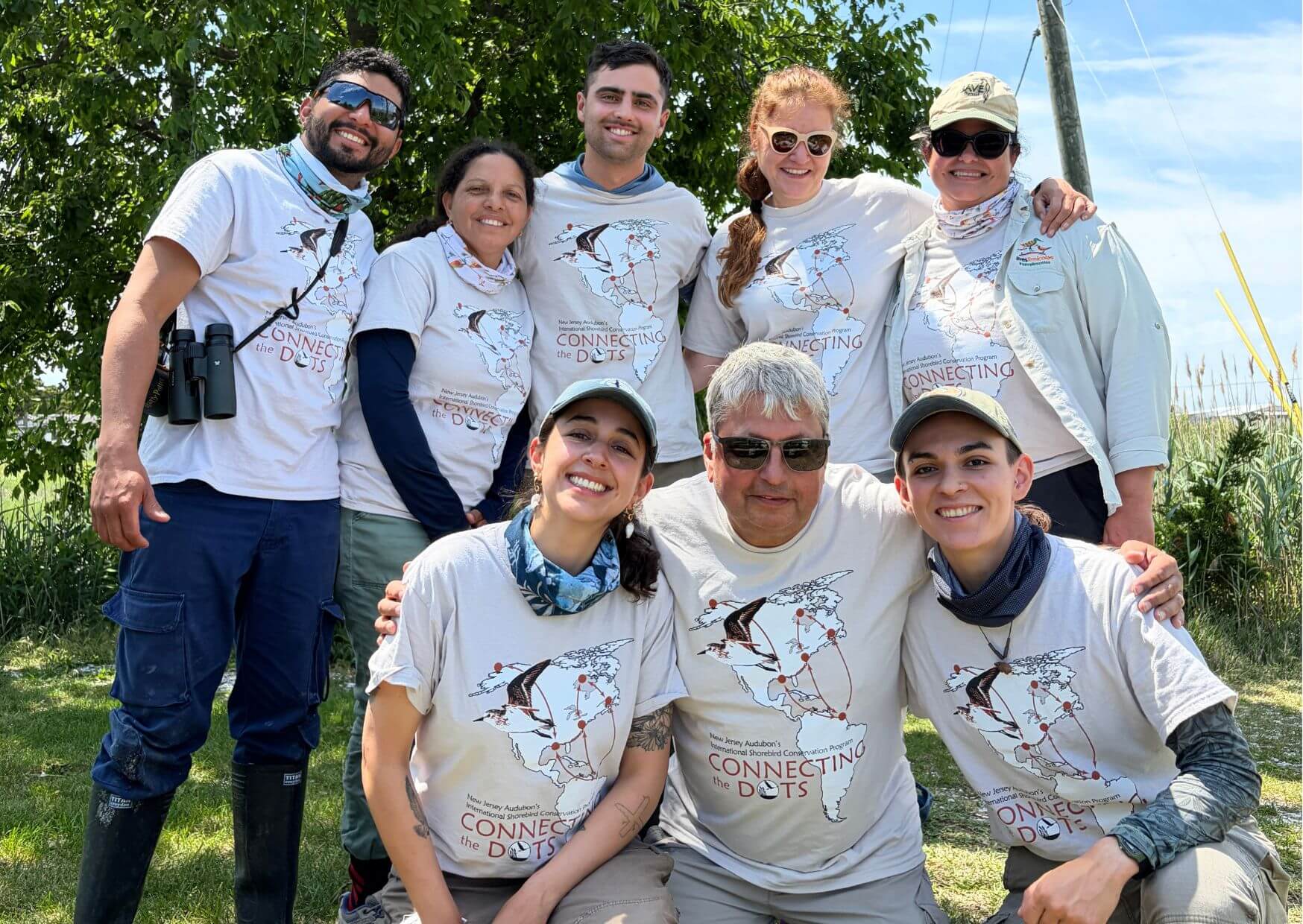
I shared this experience with colleagues from SAVE Brasil; Chile’s Red de Observadores de Aves y Vida Silvestre (ROC); a BirdsCaribbean colleague from the Dominican Republic; an Environment for the Americas colleague from Venezuela; and an independent conservation professional from Paraguay. Working alongside colleagues with such diverse cultures and experiences was incredibly enriching, and I hope some of these connections will lead to shared projects or areas of work in the future.
During our Delaware Bay campaign, the tides determined when each day began and when we headed into the field. Some mornings started before dawn; others began several hours later. Everything depended on the birds and on the experienced local team’s ability to read or at least anticipate how the flocks would respond to the changing tide.
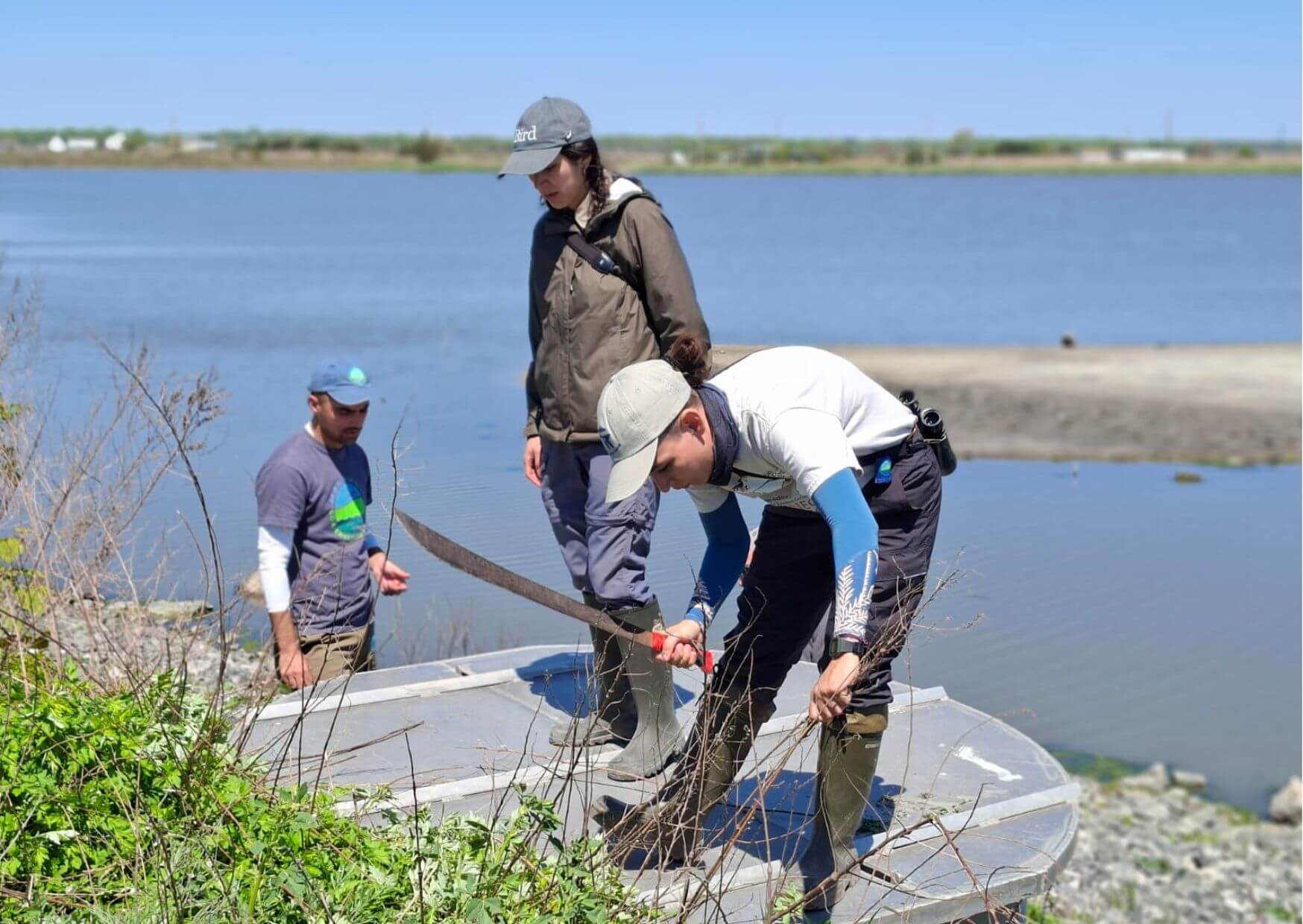
Each day brought a different study site. As soon as we stepped out of the vehicles, the still-quiet landscape quickly became a busy field station. Each team member took up their role with almost no need to speak. While part of the team set up the whoosh net or mist nets, others organized the banding station, making sure everything was ready for the moment when the birds moved within range.
Watching that coordination taught me one of the trip’s first lessons: behind every successful capture were years of experience. The work also depended on trust. Each person had to understand and take ownership of their role and responsibilities so that the team could function as one.
After a successful capture, another race against time began. On some days, we processed more than 150 birds. Each bird was carefully handled through a standardized series of procedures: biometric measurements were recorded; the bird was fitted with a metal band and a small identification flag; and, depending on the goals of each project, biological samples such as blood, feathers, or fecal material were collected. Some birds were also fitted with tracking transmitters using either radio telemetry or satellite GPS technology.
At the end of each day, we returned to the New Jersey Audubon office to process the biological samples. After several hours of intense concentration in the field, the atmosphere shifted completely. Surrounded by tubes, data sheets, and computers, we talked about what had worked, shared our observations from the day, and recalled the stories that inevitably emerged from every field outing. Those moments were also an important part of the training.
Throughout the campaign, we were visited by people who had helped shape the history of the banding program and shorebird conservation at Delaware Bay. Listening to their experiences made me realize that the work we were doing had not begun with us, nor would it end when we returned to our countries. We were simply one more chapter in a story built by generations of researchers, volunteers, and organizations committed to conserving these species.
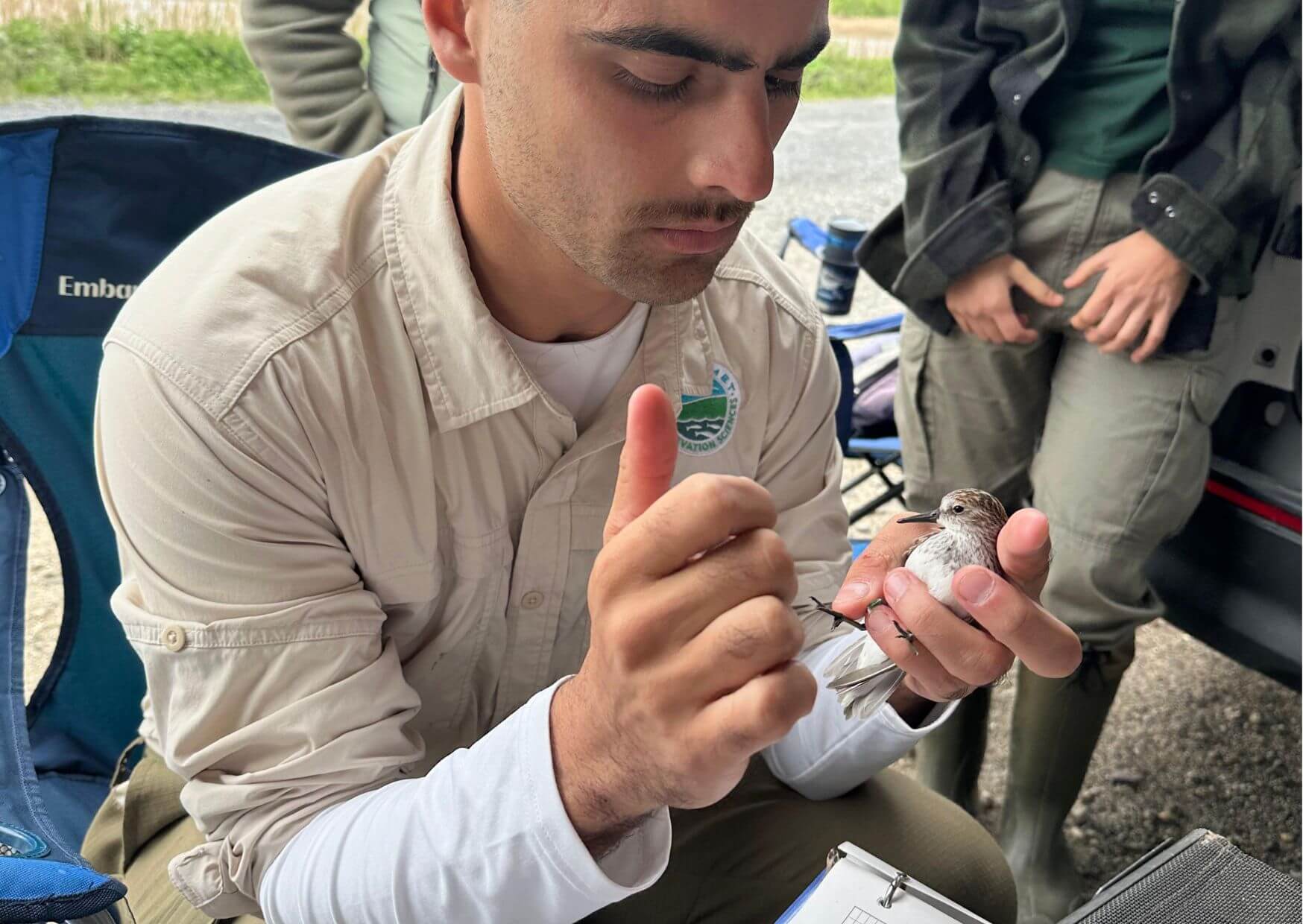
Every step was designed to minimize handling time and safeguard the birds’ well-being.
What I learned from this experience extended far beyond capture methods. Each day strengthened our technical skills, but it also introduced us to different ways of working, different cultures, and different approaches to conservation. The team was so diverse that every conversation taught us something new. We shared stories about our countries, our projects, and the challenges we face in studying and conserving migratory shorebird species.
After setting the nets, we had to wait for the birds to approach the capture sites. Those moments made me realize that working with shorebirds also means learning to wait: for a tide, a flock, or exactly the right moment. During those pauses, conversations helped us get to know one another and strengthen the bonds we were forming as colleagues.
Like any good Argentine, I can’t go without mate. Whenever there was a pause or a break, I would prepare it a traditional Argentine drink passed around among everyone in a circle. By the end of the campaign, more than half the group had joined me in that circle.
I believe that small ritual captures better than any other image what that month in Delaware meant. We arrived as professionals from different countries, brought together for a training program. We left as colleagues and friends, and as part of a single network that like the birds we work to protect connects an entire continent.
Photos: Pablo Gigy Gregoret