

Ariadna Medina
Shorebird conservation requires more than scientific rigor; it also depends on strong connections with local ecosystems and the people who call them home. During the 2025 breeding season, I had the opportunity to lead a research project at the WHSRN site of Playa Ceuta in Sinaloa, Mexico, focused on the food resources that sustain shorebird populations at this site of regional importance.
This work was made possible through the support of the Manomet Small Grants for Conservation of Neotropical Shorebirds. I am also deeply grateful to Dr. Medardo Cruz, who gave me the opportunity to collaborate with him in 2024. That experience marked my first steps into shorebird research and laid the foundation for my professional development in the field. Together, these opportunities have transformed my perspective as a conservation professional while generating valuable information to support the management of a WHSRN site.
Located in the Mexican state of Sinaloa, Playa Ceuta is an ecosystem of exceptional ecological value. Its salt marshes and beaches provide nesting habitat and refuge for species such as the Snowy Plover (Anarhynchus nivosus) and the Wilson’s Plover (Anarhynchus wilsonia).
The breeding success of these birds depends on several factors, including the availability of food resources.
Photo: Ariadna Medina
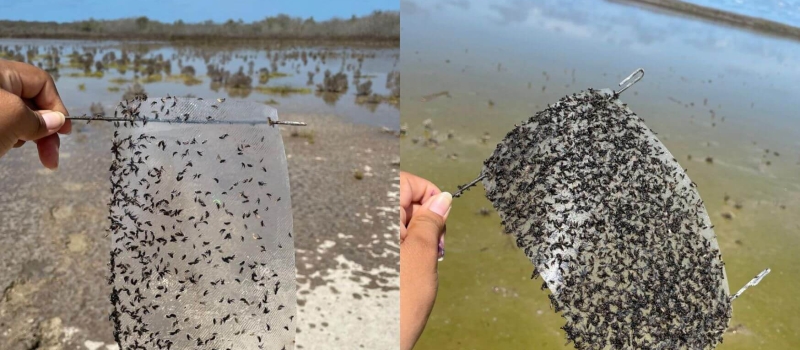
The core of the project focused on understanding the presence and abundance of invertebrates, the primary food source for many shorebirds. Through continuous monitoring, we documented how food availability changed throughout the breeding season. During the first surveys in April 2025, water availability was limited, shorebird numbers were relatively low, and invertebrate abundance was also scarce. As the season progressed, higher tides in June allowed water to enter the salt flats, resulting in a notable increase in invertebrate abundance, particularly flies of the family Dolichopodidae (long-legged flies).
Beyond the Data: The Impact of Environmental Education
An essential component of this project was working alongside the local community. We believe that science only achieves its full potential when it reaches the people who live in and care for the landscapes being studied. With this in mind, we carried out environmental education activities in elementary schools located in communities surrounding Playa Ceuta.
To connect with children and young people, we developed original educational materials that introduced shorebirds through engaging and accessible stories. The centerpiece of this effort was the creation of the comic book The Wings of Bahía de Ceuta (Las alas de Bahía de Ceuta). In this story, the birds are not simply research subjects, they become the narrators of their own journeys and the challenges they face.
The comic was complemented with additional educational tools, including a shorebird-themed version of the game Guess Who? and coloring pages featuring local wildlife. Witnessing the shift in students’ perspectives has been one of the most rewarding outcomes of the project. Many went from seeing shorebirds as something distant or unfamiliar to recognizing them as part of their own natural heritage and community identity. Lasting conservation begins when local communities become the primary stewards of their environment.
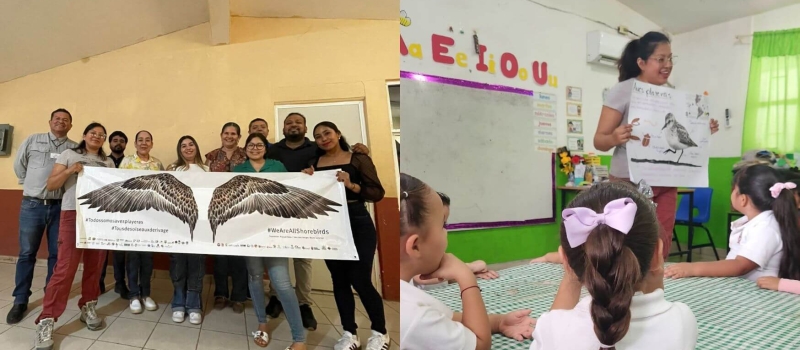
Lasting conservation begins when local communities become the primary stewards of their environment.
Photo: Ariadna Medina
Professional and Personal Growth
Participating in the Small Grants Program has been a turning point in my career. Early-career conservation professionals often have technical knowledge but few opportunities to lead a project from beginning to end. This program provided the structure and support needed to take full responsibility for every stage of a research project; from field logistics and resource management to communicating the results.
Professionally, I strengthened my field research skills and expanded my experience designing environmental education initiatives. Personally, the project tested my resilience. Conducting fieldwork in Sinaloa requires constant adaptation to changing conditions, from unpredictable weather to the social complexities of the region. Learning to navigate these challenges while staying focused on the project’s goals has been one of the most valuable lessons of this experience.
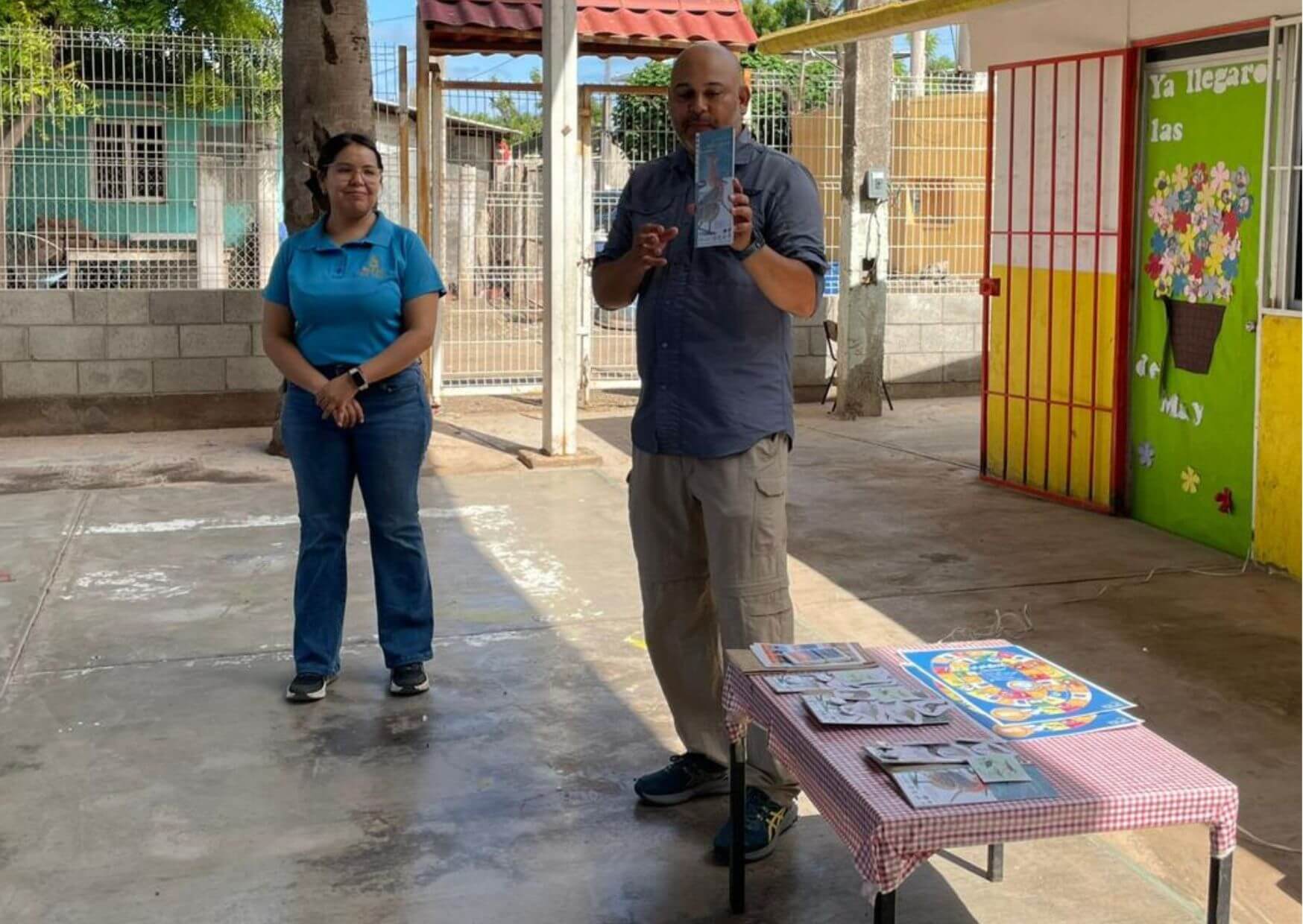
The future of shorebirds is inseparable from the health of wetlands and the commitment of the communities that care for them.
Photo: Ariadna Medina
The Small Grants Program does more than support scientific research, it also helps develop the next generation of conservation leaders. It has allowed me to build bridges between international conservation organizations and the people in my own community. Today, I feel better prepared to continue contributing to shorebird conservation, understanding that every data collected and every child inspired by a story about nature represents another step toward a more sustainable future.
The work at Playa Ceuta reinforces a fundamental truth: the future of shorebirds is inseparable from the health of wetlands and the commitment of the communities that care for them. I am deeply grateful to everyone who has guided and trusted me throughout this journey. Together, we will continue working to ensure that science and community engagement fly side by side in the conservation of our shared natural heritage.