

Applications are now open for Manomet’s Small Grants Program 2026, supporting early-career conservationists working to protect shorebirds across Latin America and the Caribbean. Since its launch in 2023, the program has backed projects delivering measurable impacts on the ground, many led by emerging leaders shaping the future of conservation in the region.
One of them is Nayeli Anais Vargas Valladares, a 2024 awardee from Nicaragua. Her project evaluates shorebird breeding populations in the Delta del Estero Real, a WHSRN Site of International Importance in Nicaragua. Nayeli is helping uncover critical nesting habitats and informing practical conservation actions.
We spoke with Nayeli about her work, what the Small Grants Program made possible, and what comes next.
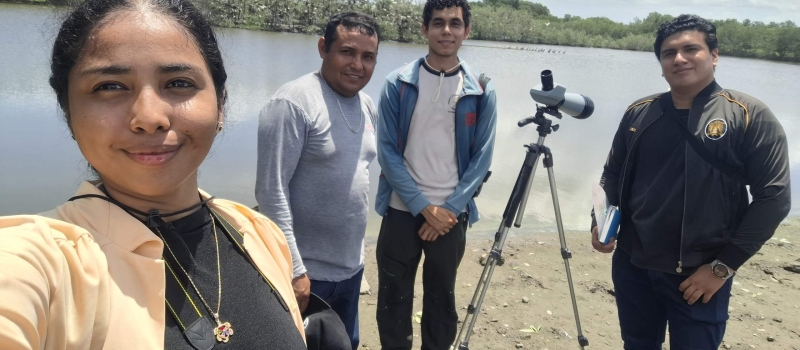
Project Title: Assessment of the Resident Shorebird Breeding Populations in the Delta del Estero Real Nature Reserve, Nicaragua
How does this program contribute to shorebird conservation in your country or region?
This project helped identify areas outside the National System of Protected Areas that function as nesting sites for resident shorebirds. One key finding was the importance of the Paso Caballos salt farm, where traditional production and harvesting methods allow for viable coexistence with shorebirds during their breeding cycles.
In shrimp farming areas, relocating nests appears to be the most viable strategy to support bird survival within ponds. However, the results highlight the urgent need for a standardized protocol that defines critical variables, such as incubation timing and relocation distance, to ensure the success of this intervention without disrupting parental care.
This study also laid out the groundwork for future research on site fidelity across successive breeding seasons. It opened opportunities to expand monitoring efforts to other potential breeding areas, such as near Isla Juan Venado Natural Reserve and the Salinas Grandes salt farm, enabling comparative analyses of survival rates and exposure to both human and natural pressures.
What key aspects of your project were supported by the Small Grants funding?
The funding supported several essential components of the project, including transportation to access remote monitoring sites. It also ensured that field teams could remain on-site for extended periods of time, enabling consistent data collection. Additional support strengthened community engagement through workshops with shrimp farm workers and students, while educational materials helped establish a local community members reporting system for nest sightings and focal species.
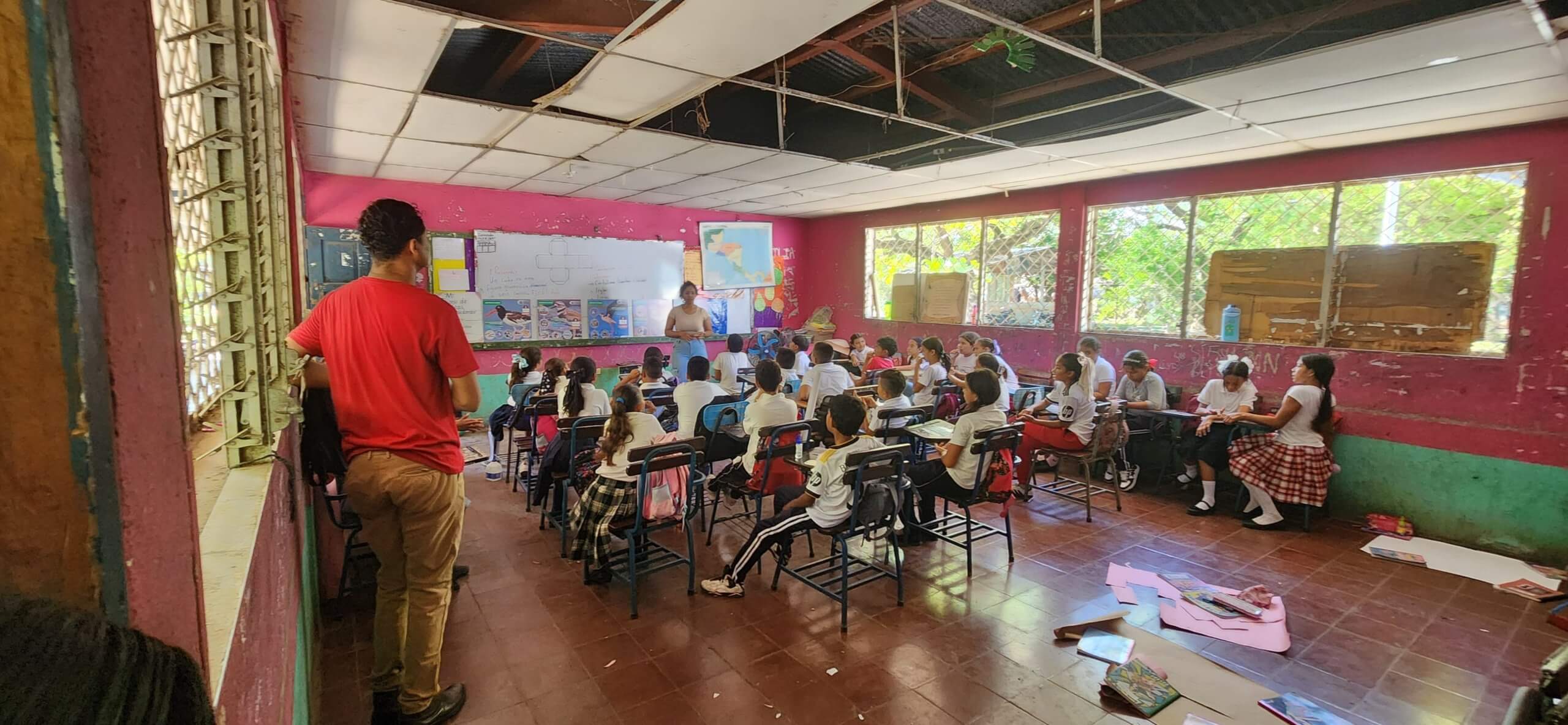
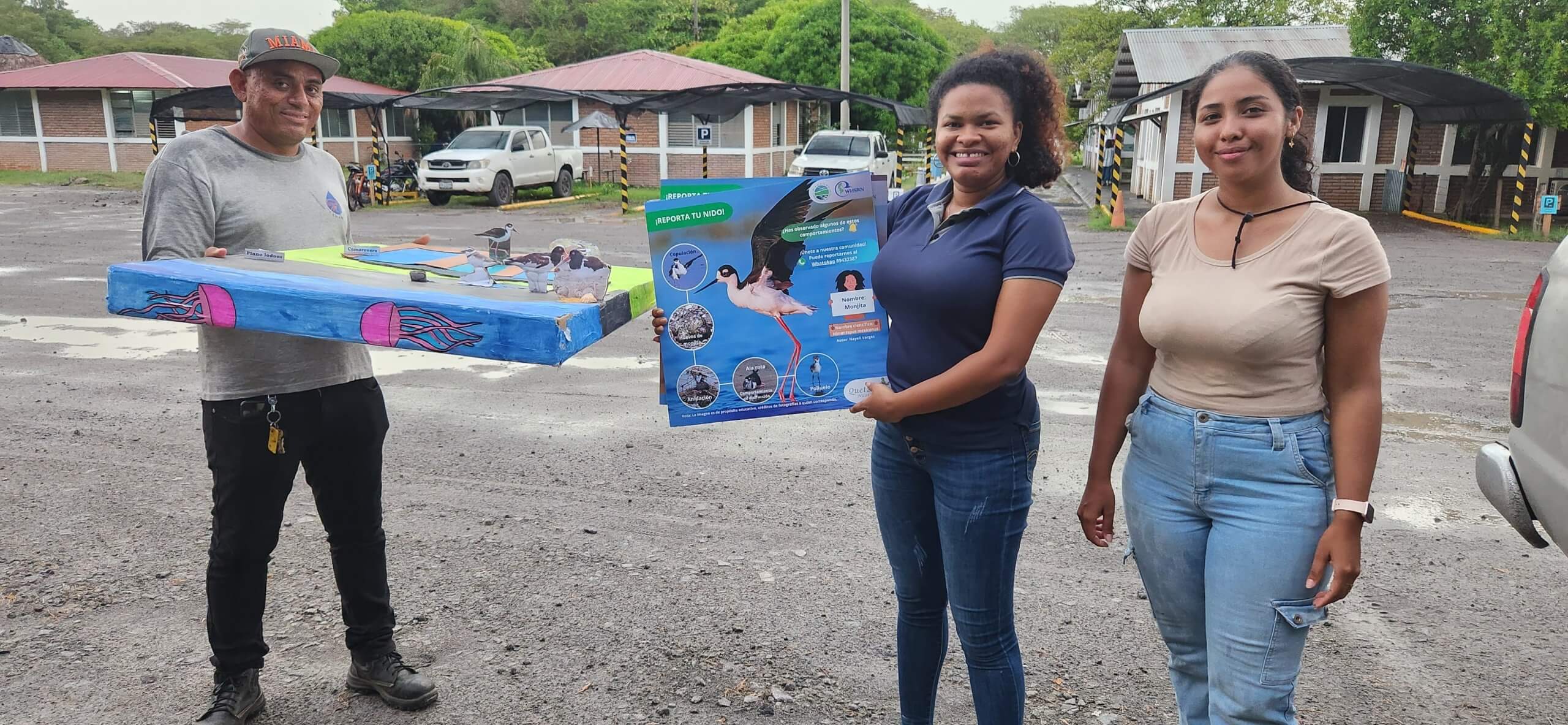
Additional support strengthened community engagement through workshops.
What impact has this program had on your personal and professional development?
This program gave me the opportunity to lead my first shorebird research project, providing invaluable professional recognition.
It has also helped position me for future opportunities in biodiversity conservation. For example, I participated in the Ornithology Careers Institute (OCI 2025), where I further developed technical skills in bird identification, monitoring, handling, and banding of birds. I also gained initial experience in deploying GPS devices on Hudsonian Whimbrels Numenius hudsonicus and preparing bird specimens for educational purposes.
What are your next steps, both immediately and in the long term?
After completing this project, my immediate goal is to strengthen my field experience by joining new internships or professional projects that allow me to diversify my technical skills and deepen my understanding of different ecosystems.
In the long term, once I complete my academic degree, I plan to apply to international graduate programs. My goal is to specialize further and contribute more rigorously to biodiversity research and conservation.
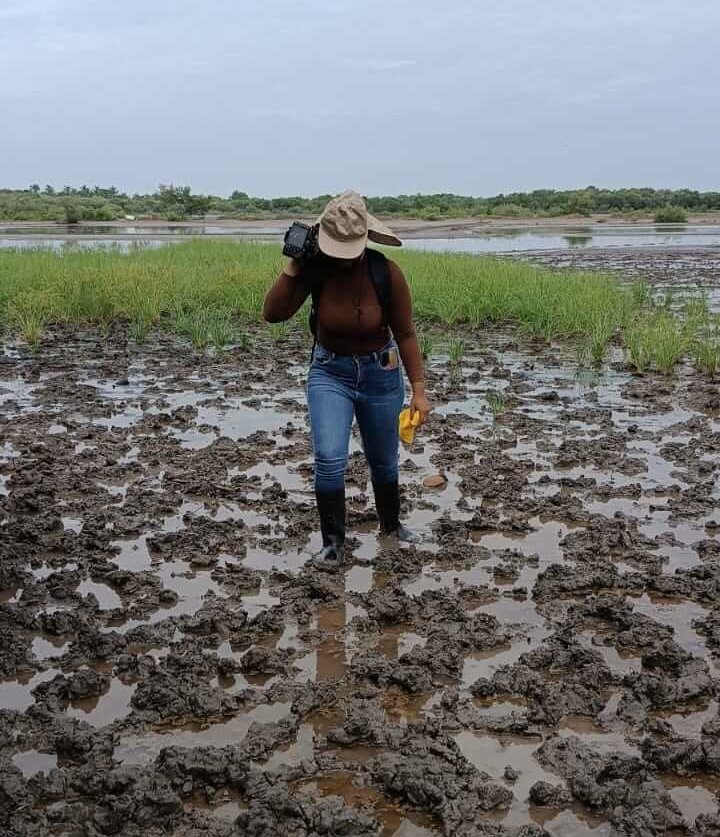
“ It was a comprehensive learning experience in project management that significantly strengthened my professional profile.“
What would you say to someone considering applying to the Manomet Small Grants program?
If you’re thinking about applying, do it without hesitation.
Leading your own project will give you experiences and perspectives that no book can offer. You’ll learn that nothing in nature is predictable, and that a single day in the field can completely change your plans, but that’s where real growth happens. You’ll connect with communities, experience the unpredictability of ecosystems, and, most importantly, discover what you’re truly capable of achieving. It’s the professional leap you need to gain the experience that will open doors in the future.
Nayeli’s story is one of many showing what’s possible when early-career conservationists are given the tools and trust to lead. If you have an idea that can make a difference for shorebirds in Latin America or the Caribbean, this is your opportunity to turn it into action. Applications for Manomet’s Small Grants Program are now open—apply by May 30, 2026.
Photos: © Nayeli Anais Vargas Valladares