

Laguna Mar Chiquita, Argentina’s largest saline lake and one of the largest in South America, located in the northeast Córdoba Province, was the setting for the fifth edition of the Environmental Leaders Forum (December 4-6, 2025) and the first edition of the Ansenuza Migratory Festival (December 6-8, 2025). Both activities were supported by Fundación Líderes de Ansenuza (FLA) and Manomet Conservation Sciences through the Executive Office of the Western Hemisphere Shorebird Reserve Network (WHSRN). Within this framework, the Forum was developed as part of the Experiencia Ambientalia program, aimed at strengthening young environmental leaders, while the Festival was organized as a joint initiative with Aves Argentinas.
The Forum encouraged exchange between students, teachers, and speakers who promote biodiversity conservation projects in their communities. At the same time, with the support of the National Parks Administration, the Technical Roundtable on Hydrology and Watershed Management of the Mar Chiquita System and the Technical Roundtable on Research – Mar Chiquita System were held, both focused on the exchange of technical information, the development of common diagnoses, and decision-making related to watershed management.
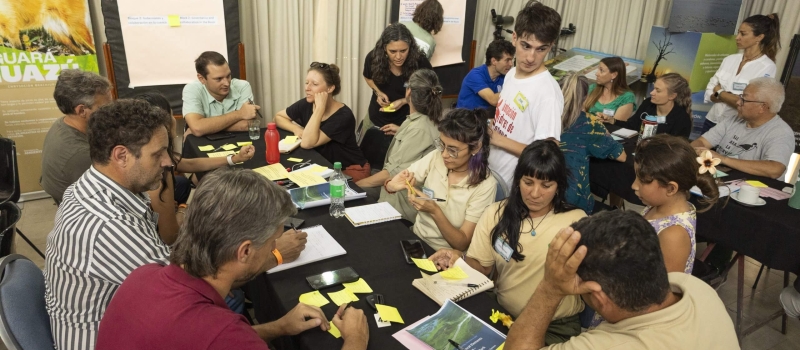
Representatives from North American saline lakes were present, providing an opportunity to share experiences and discuss conservation challenges related to other sites in the Western Hemisphere Shorebird Reserve Network (WHSRN).
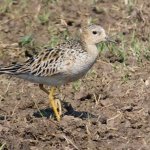
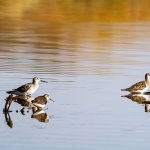
In addition to Laguna Mar Chiquita, experiences and conservation challenges related to three other WHSRN sites were shared in both forums: Laguna de los Pozuelos Natural Monument (Jujuy, Argentina), Mono Lake (California, United States), and Great Salt Lake (Utah, United States). Although located in distant regions, all of these wetlands share similar ecological characteristics and conservation challenges. They are all connected by Wilson’s Phalarope (Phalaropus tricolor), a shorebird that inhabits saline wetlands, which are key sites during its migration. However, they also share threats, such as declining water levels caused by overexploitation of the resource and the effects of climate change.
In challenging contexts, collaborative conservation efforts are a source of hope, inspiring new generations, and spreading to other regions. Marilena Servín, 21, is part of “The Phalaropes,” the name of the Experiencia Ambientalia volunteer team. She describes the program as resilient and purpose-driven, and says that thanks to this experience, she decided to study Environmental Management while working in the environmental department of her municipality. “No matter what adversities we face, we will continue because there is a goal we want to achieve, and hopefully it can be replicated everywhere,” she says. Her testimony reflects the impact of the program. For Andrew Youssef, Digital Interaction Coordinator for the Mono Lake Committee, replicating this experience and generating a positive impact on both young people and the community is a priority. “This is one of the most important jobs being done today: training these young environmental leaders who are our future,” he says.
“No matter what adversities we face, we will continue because there is a goal we want to achieve, and hopefully it can be replicated everywhere,” –Marilena Servín

Marilena studies Environmental Management while working in the environmental department of her local council in Brinkmann, a town in the north-east of Córdoba, near the Ansenuza region.
After intense days of youth engagement and inspiring projects, the Ansenuza Migratory Festival kicked off in nearby towns such as Miramar de Ansenuza, Morteros, and La Para, with the aim of celebrating the importance of the site for migratory shorebirds. The Festival brought together local residents and tourists who enjoyed bird watching, talks with experts, hands-on art workshops, games, and a colorful fair featuring local artisans and environmental organizations.
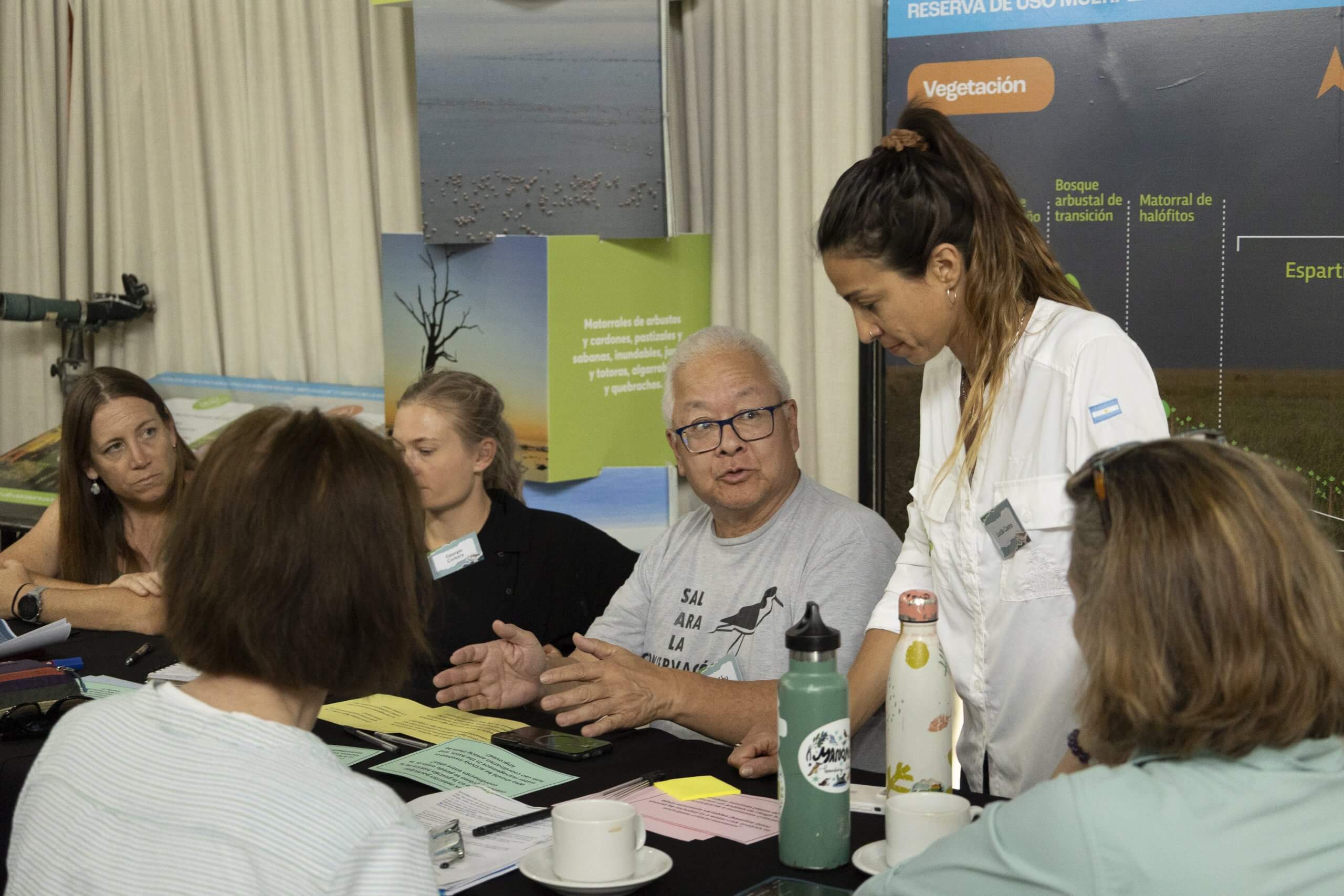
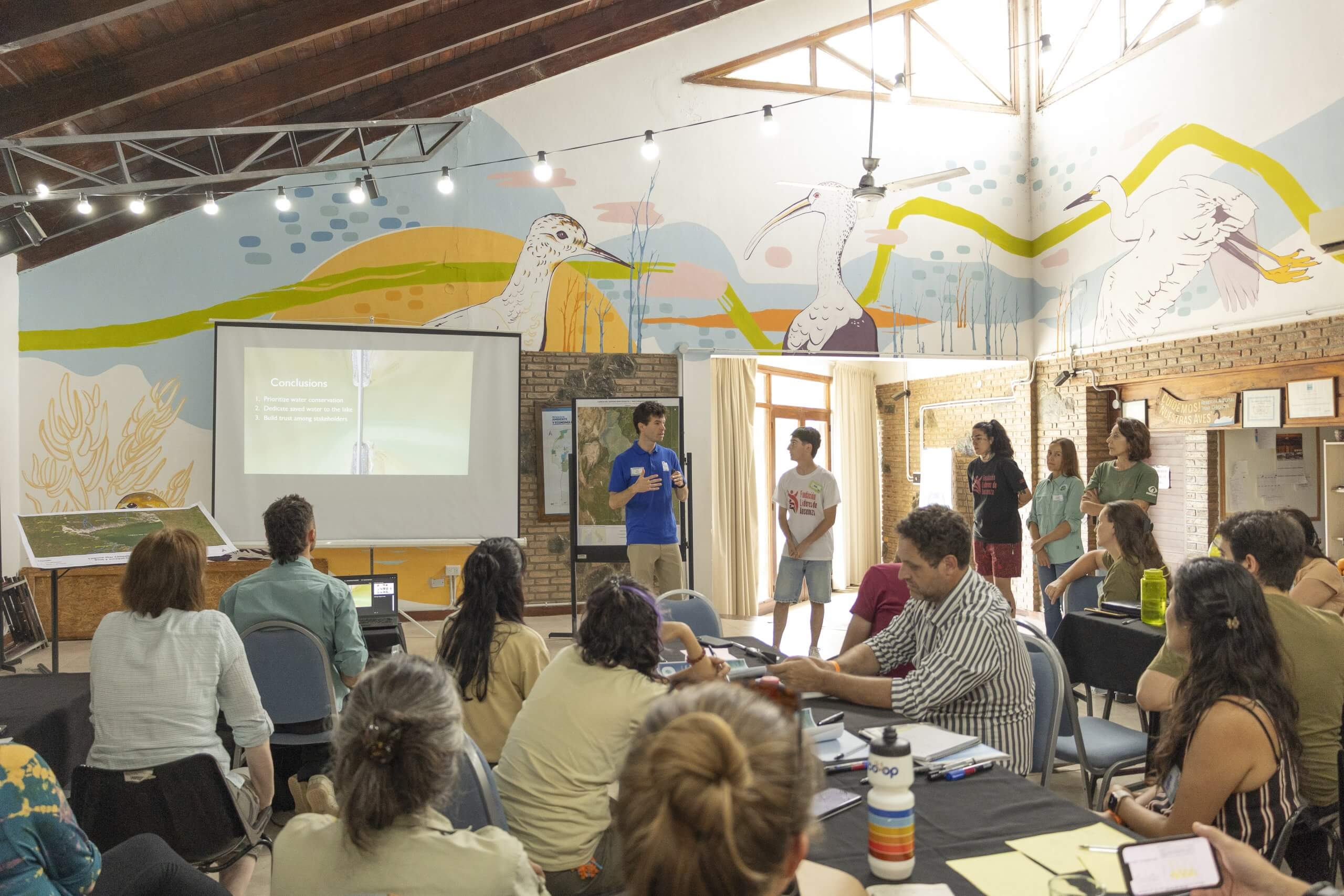
The activities took place in several towns in the Córdoba province, a community deeply connected to the environment.
According to Jim Chu, who has played a central role in shorebird conservation across the Western Hemisphere, the Festival exemplifies active community engagement to protect the environment and strengthen environmental awareness alongside schools, children, families, and local communities. Jim recently received the “Linking Sites” Award in recognition of his leadership and commitment to the mission of WHSRN. This was not his first visit to the site; in fact, he notes, “In the past, some students were selected to participate in the Forum, and now some of those leaders are part of the organizing team. So, I have seen a strong interest and deep passion for conservation within the community”.
Both initiatives highlight the role of young leaders in the local community as drivers of conservation at the regional and hemispheric levels.
Photos: © Andrea Ferreira