

The Western Hemisphere Shorebird Reserve Network (WHSRN) welcomes Laguna Llancanelo, located in Mendoza Province, Argentina, as WHSRN Site 126, designated under the Regional Importance category.
Laguna Llancanelo encompasses approximately 88,000 hectares of wetlands in western Argentina and includes a shallow endorheic lagoon with saline to hypersaline waters, as well as marshes, springs, rivers, streams, and salt flats. The site has a strong conservation track record and is protected under multiple designations, including Provincial Reserve, Ramsar Site since 1995, Important Bird Area (IBA), and Key Biodiversity Area (KBA).
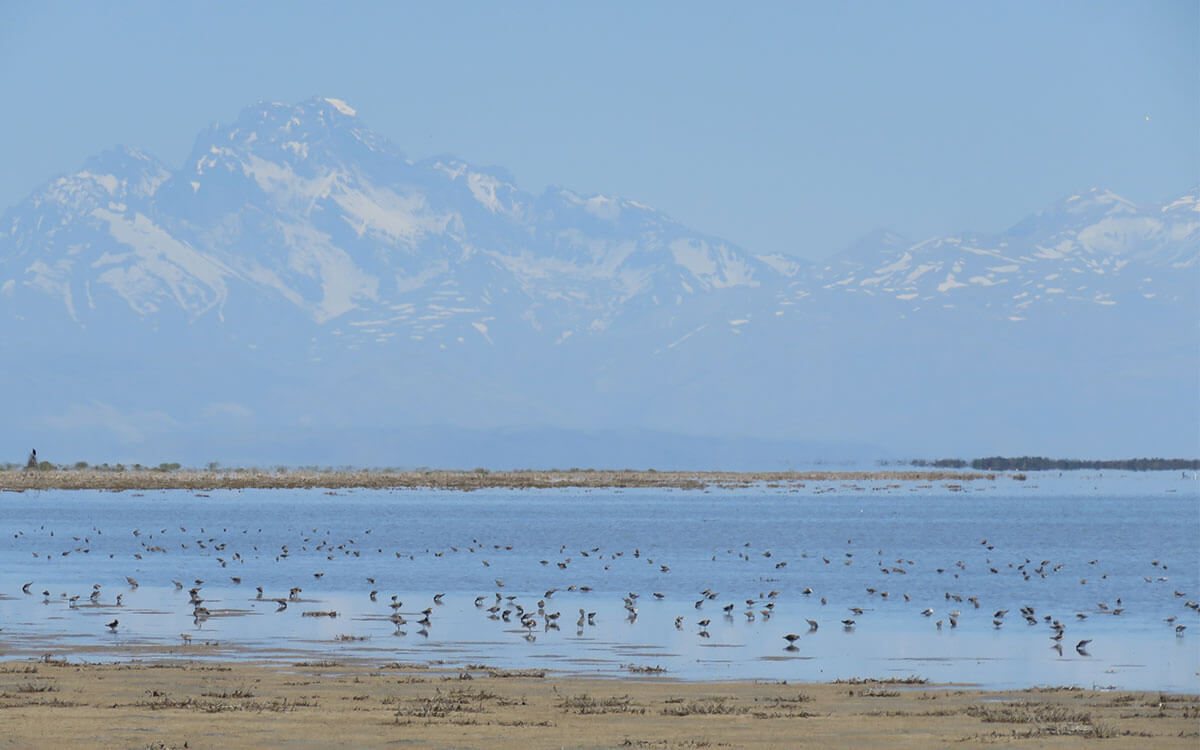
Foraging groups of Baird’s Sandpiper (Calidris bairdii) along the western shore of Laguna Llancanelo. Photo: Heber Sosa
The designation of Laguna Llancanelo as a WHSRN site is based on the importance of this wetland for migratory shorebirds, particularly Baird’s Sandpiper (Calidris bairdii). Recent surveys conducted in 2023 and 2024 recorded 4,299 individuals of this species during the austral summer, exceeding the 1% threshold of its estimated global population, which qualifies the site as one of Regional Importance within the Network. Historical records indicate that Laguna Llancanelo has maintained significant abundances of this species over several decades.
In addition to its importance for shorebirds, the site supports a remarkable diversity of waterbirds, with 186 species recorded. Laguna Llancanelo is particularly important for the Chilean Flamingo (Phoenicopterus chilensis), supporting populations that represent more than 11% of the species’ total population, as well as regular breeding colonies, placing Llancanelo among the most important breeding sites for this species in Argentina.
Laguna Llancanelo also plays a key role for local communities, primarily criollo pastoralist communities, who maintain an active relationship with the protected area and participate in initiatives related to site management, wetland restoration, and environmental education, in coordination with provincial park rangers and conservation organizations.
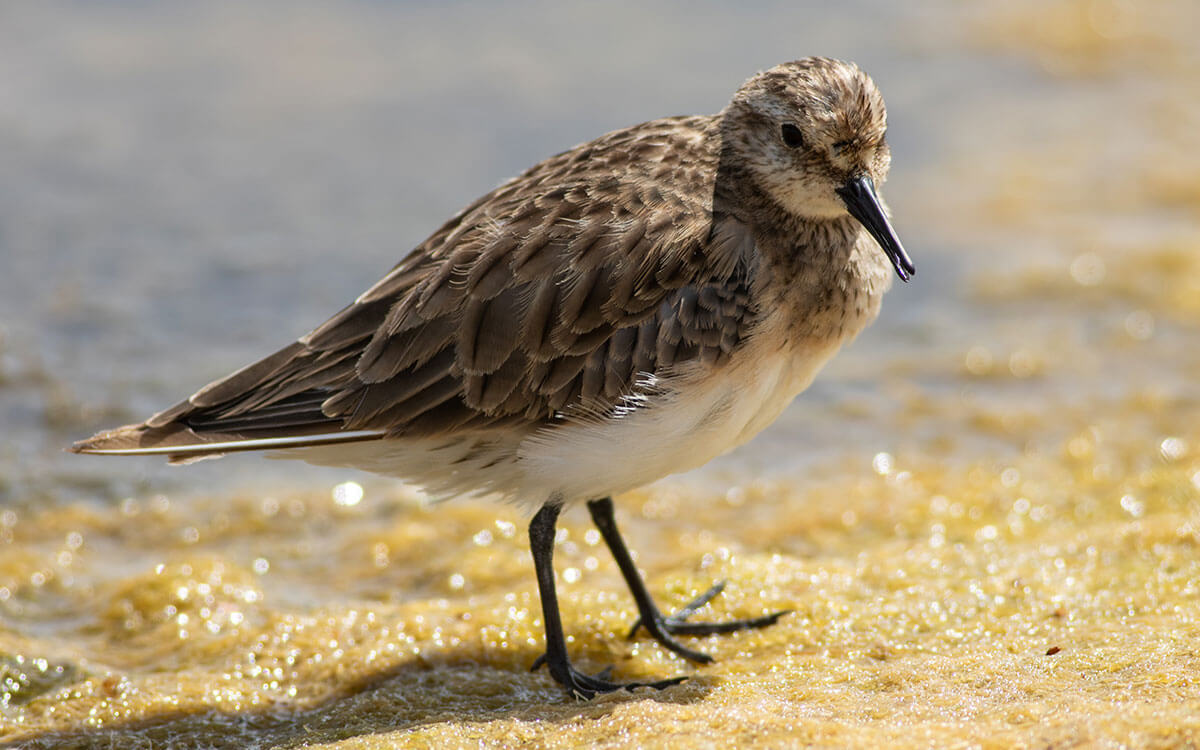
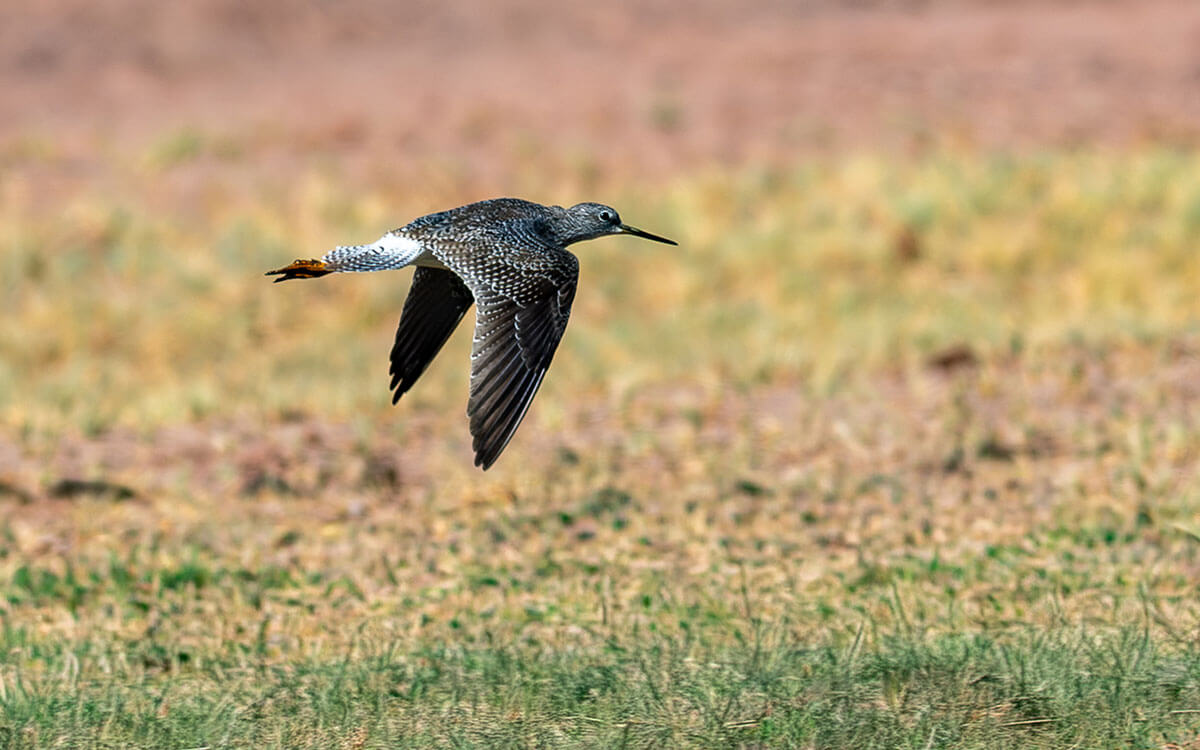
Left: Baird’s Sandpiper at Laguna Llancanelo, a key site supporting regionally significant concentrations of this migratory shorebird. – Right: Greater Yellowlegs (Tringa melanoleuca) in flight over the wetlands of Laguna Llancanelo, one of several shorebird species that regularly use the site. Photos: Carlos Robledo
The designation of Laguna Llancanelo as a WHSRN site was made possible through the joint efforts of local partners, provincial authorities, and conservation organizations that supported its nomination and have contributed consistently to its management and protection. These include the Directorate of Biodiversity and Ecopark and the Directorate of Protected Areas of the Ministry of Energy and Environment of the Government of Mendoza, the Directorate of Environment of the Municipality of Malargüe, the Foundation for Socio-environmental Study and Intervention (EISA), and Fundación Humedales / Wetlands International.
The incorporation of Laguna Llancanelo into WHSRN strengthens the network of critical sites for shorebird conservation along migratory flyways and reinforces regional management and cooperation efforts in South America. With this designation, Argentina adds its twelfth WHSRN site, consolidating its commitment to the conservation of wetlands and migratory birds.
Cover Photo: Flock of Greater Yellowlegs at the new WHSRN Site Laguna Llancanelo. Photo: Carlos Robledo