
Meet the 2026 Manomet Small Grant Awardees for Neotropical Shorebird Conservation
Manomet Conservation Sciences is pleased to announce the nine recipients of the 2026 Manomet Small Grants for Neotropical Shorebird Conservation. This initiative empowers a new generation of shorebird researchers and conservationists in Latin America and the Caribbean by giving them opportunities to design, lead, and implement their own conservation projects.
In its fourth year, the program received 62 proposals from 17 countries across Latin America and the Caribbean, representing the broadest geographic participation since its launch in 2023. These figures reflect the growing interest in shorebird conservation and the commitment of early-career professionals seeking to make a positive difference for these species and their habitats. After a rigorous evaluation process, the program selected nine projects for their potential to advance scientific knowledge and deliver tangible conservation outcomes.
The Manomet Small Grants Program supports research and conservation initiatives that benefit Neotropical shorebird species, with particular attention to sites within the Western Hemisphere Shorebird Reserve Network (WHSRN) and those with the potential to join the Network. Beyond financial support, the program seeks to strengthen the technical skills, leadership abilities, and professional networks of individuals taking their first steps in conservation.
The projects selected in 2026 address a wide range of shorebird conservation challenges, from studying breeding ecology and poorly understood habitats to assessing threats from human activities. They also explore opportunities to integrate conservation into working landscapes, such as salt farms and rice fields, while strengthening local communities’ involvement in protecting these species.
With this new cohort of awardees, Manomet reaffirms its commitment to investing in the people who will shape the future of shorebird conservation in Latin America and the Caribbean. We sincerely appreciate everyone who applied for the quality of their proposals, enthusiasm, and dedication, as well as our donors, whose generous support makes this program possible.
Meet the nine recipients of the 2026 Manomet Small Grants and discover the projects through which they will contribute to Neotropical shorebird conservation.
Renata Collareta Mérida
Bolivia’s High Andean Wetlands
Renata Collareta Mérida is a Biology undergraduate student completing her thesis at the Universidad Mayor de San Andrés (UMSA) in Bolivia. Passionate about birds and their conservation, she has a particular interest in shorebirds, a group that played an important role in her early professional experience and helped strengthen her commitment to biodiversity conservation. Her interests focus on protecting high Andean ecosystems and recognizing the importance of wetlands as essential habitats for numerous species. Through her academic training and experience, she seeks to contribute to the conservation of birds and the natural environments on which they depend.
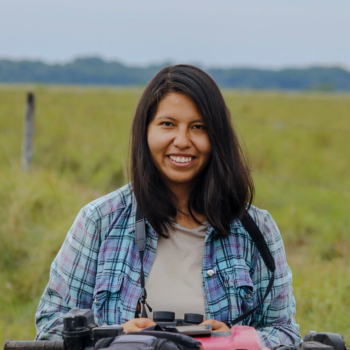
Her project, entitled “Protecting Bolivia’s High Andean Wetlands for the Conservation of the Diademed Sandpiper-Plover (Phegornis mitchellii)”, focuses on the importance of high Andean wetlands for the conservation of this shorebird species. The initiative aims to contribute to the protection of its habitat and promote the conservation of these ecosystems, which are essential for its survival.

Matías Gutiérrez
Humedal Marino de Coihuín, Los Lagos region, Chile
Matías is a sixth-semester Veterinary Medicine student at Santo Tomás University in Puerto Montt, Chile, and an avid birdwatcher. He is a member of the Chilean Bird and Wildlife Observers Network (ROC) and the Laboratory of Ornithology and Territorial Social Ecology (LOEST). He has experience in waterbird and shorebird monitoring and surveys, scientific bird banding of passerines and raptors, and wildlife rehabilitation. He works as a field ornithologist on ROC conservation projects, a bird bander at the Katalapi Bird Banding Station, educational coordinator of the ROC Los Lagos Chapter, and president of the ADEFAS Patagonia UST student organization. He has presented his work at the 14th and 15th Chilean Ornithology Congresses and the 2025 Americas Pacific Flyway Youth Forum. He aims to integrate veterinary medicine with shorebird conservation through a One Health approach.
His project, entitled “Promoting Responsible Dog Ownership for the Conservation of the American Oystercatcher at the Coihuín and Chamiza Wetland WHSRN Site”, aims to reduce the impact of free-roaming dogs on the reproductive success of the American Oystercatcher (Haematopus palliatus). The project will focus on dog sterilization and adoption, participatory nest monitoring, and community education, using the American Oystercatcher as a flagship species.
Jarliene Araújo
Maranhão Coast, Brazil
Jarliene is a biologist who graduated from the State University of Maranhão (UEMA) and is currently pursuing a master’s degree in Ecology and Biodiversity Conservation (PPGECB/UEMA). She began her conservation career as a volunteer monitoring resident and migratory birds along the Maranhão coast. She is a member of UEMA’s Bird Ecology and Conservation Research Group, where she completed her undergraduate thesis focusing on the occurrence and temporal dynamics of Calidris canutus rufa. In addition to studying the ecology of migratory shorebirds that use the state’s coastline, her current master’s research focuses on assessing the potential risks posed by the expansion of energy infrastructure to habitats used by these species along Brazil’s Equatorial Margin.
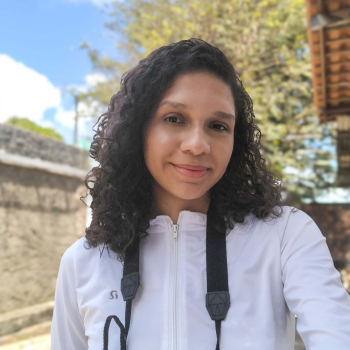
Her project, entitled “Potential Risks of Energy Expansion to Haematopus palliatus Habitats Along the Maranhão Coast, Brazil”, aims to identify priority areas for Haematopus palliatus in two municipalities along the eastern coast of Maranhão. The study will assess the potential risks associated with energy development projects, identify vulnerable habitats, and provide information to guide monitoring efforts and land-use planning.
Marina Maximiano
Southern Amazon, Brazil
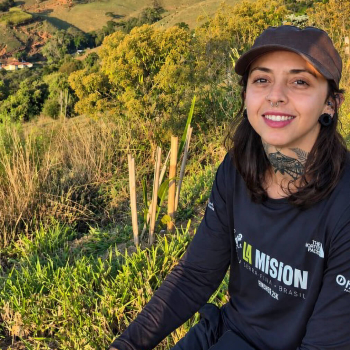
Marina Maximiano is a Brazilian biologist and ornithologist with a PhD in Ecology from the National Institute of Amazonian Research (INPA). Her research focuses on the ecology, biogeography, and conservation of Amazonian birds. She began her career working in Atlantic Forest fragments and restoration areas in São Paulo, later gaining experience in environmental consulting and wildlife surveys across Brazil. Her work has since evolved toward understanding patterns of bird diversity and distribution in the Amazon. Her experience includes fieldwork in remote regions, mist-netting and bird handling, passive acoustic monitoring, biological sampling, ecological data analysis, and participatory research with traditional communities. By combining field-based research with broader ecological questions, Marina seeks to advance scientific knowledge and contribute to effective biodiversity conservation.
Her project, entitled “Establishing a Baseline for the Conservation of a Little-Known Population of Gallinago undulata in the Southern Amazon”, seeks to generate the first ecological knowledge about this poorly known shorebird at Mapinguari National Park and establish the relationship between its northern and southern populations through comparison with the population at the Guapiaçu Ecological Reserve (REGUA, Rio de Janeiro). The results will support long-term monitoring and conservation.
Victoria Magdalena Pizá
Islote Lobos National Park, Argentina
Victoria holds a degree in Marine Biology with a specialization in Marine Ecosystem Management and Conservation from the National University of Comahue, Argentina. She is a CONICET doctoral fellow at the Almirante Storni Center for Applied Research and Technology Transfer in Marine Resources (CIMAS) and has been admitted to the PhD program in Biological Sciences at the National University of Mar del Plata. Her experience includes research internships in marine ecology and the trophic ecology of waterbirds, studies on seabird strandings, and participation in science outreach and university extension initiatives, including volunteer projects, institutional lecture series, and educational activities in schools and museums. She currently investigates various aspects of the biology, ecology, and conservation of seabirds, coastal birds, and shorebirds, with a particular interest in generating scientific knowledge to support the management and conservation of coastal ecosystems in Río Negro Province and encourage the participation of local communities.

Her project, “Abundance and Reproductive Success of the American Oystercatcher (Haematopus palliatus) and Blackish Oystercatcher (H. ater): Contributions to Conservation Management in Islote Lobos National Park, Argentina”, will assess the breeding biology, habitat use, and effects of natural and human-induced disturbances on both species. The findings will help identify priority areas, propose conservation measures, and strengthen collaboration among scientific research, protected area management, and environmental education.
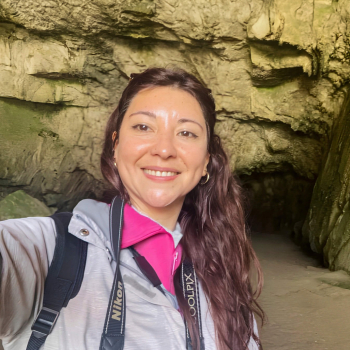
Catherine Molina Sierra
Santa María Island, Coronel, Chile
Catherine is a veterinarian who graduated from Santo Tomás University in Concepción, Chile. She holds a diploma in Environmental Assessment and Climate Change for Green Hydrogen (H2V) Projects from the University of Santiago, Chile, and has research training in wildlife ecology and conservation from the Pontifical Catholic University of Chile. She has experience in bird monitoring, scientific bird banding, and environmental education. Her involvement in the avian influenza response teams of Chile’s Agricultural and Livestock Service (SAG), her environmental consulting work in Magallanes, and her participation in the WHSRN Basic Training Program have further strengthened her commitment to wildlife and shorebird conservation. Her participation in the project “Birdwatching, Citizen Science, and Neotropical Shorebird Ecology: The Case of Santa María Island, Coronel, Chile”, along with her work at the Laboratory of Ornithology and Territorial Social Ecology (LOEST Chile), aims to promote shorebird conservation through monitoring, scientific bird banding, wetland restoration, and environmental education. These efforts seek to strengthen community engagement while advancing her career as a researcher dedicated to ornithology.
Her project, “Unraveling the Journey of the Tawny-throated Dotterel on Santa María Island, Central Chile’s Only Wintering Refuge”, will investigate the wintering ecology of Oreopholus ruficollis ruficollis through field monitoring, habitat analysis, and GPS telemetry to determine its movement patterns and site fidelity. The project also incorporates community-based environmental education to support the island’s nomination as a WHSRN site.
Ruth Noemi Azabache Odias
Lima, Peru
Ruth is a biologist who graduated from Federico Villarreal National University in Peru. She began her journey in bird conservation in 2023 as a volunteer park ranger at the Los Pantanos de Villa Wildlife Refuge, where she started learning about the identification and conservation of wetland birds, including shorebirds. In 2024, she continued gaining experience in protected area management at the Lachay National Reserve. She currently works at the Los Pantanos de Villa Wildlife Refuge, where she participates in bird and water resource monitoring, surveillance and enforcement activities, and environmental education. Her experience in this coastal wetland has strengthened her interest in bird conservation.
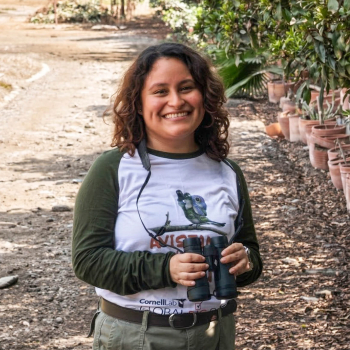
Her project, entitled “Behavioral Responses and Reproductive Monitoring of Haematopus palliatus in Relation to Human Disturbance and Population Assessment at Surrounding Sites within a Ramsar Site in Lima”, aims to assess how human disturbance affects the behavior and reproduction of the American Oystercatcher at Marvilla and Las Brisas beaches. The project will also compare two existing management measures implemented at these beaches and strengthen environmental awareness among local communities.
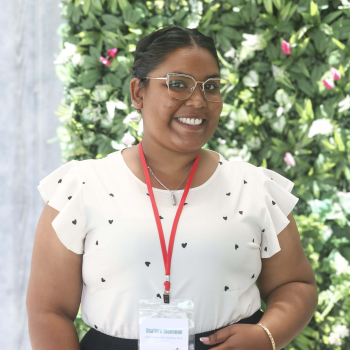
Sha’iera Moennoe
Bigi Pan Multiple Use Management Area, Suriname
Sha’iera Moennoe is a young conservationist from Suriname with a Bachelor’s degree in Environmental Management. She has participated in environmental research, shorebird surveys, community engagement, and shorebird education in Suriname. Through her work with the NGO Fauna Conservation Suriname, she contributes to initiatives that promote shorebird conservation and strengthen the connection between people and nature. Her work focuses on social-ecological approaches to conservation, recognizing that effective conservation requires not only protecting ecosystems and wildlife, but also involving and empowering local communities as active partners in safeguarding their environment.
Her project, “Assessing the social-ecological habitat quality of rice fields in the Bigi Pan Multiple Use Management Area for resident shorebirds,” aims to assess the importance of rice fields as habitat for resident shorebirds in Suriname. By examining the habitat use, food availability, seasonal patterns, and threats, the project will develop evidence-based recommendations to support shorebird conservation and promote rice farming practices that are compatible with wetland biodiversity.
Yoleydi Grisel Mejia Gadea
Salinas Grandes, Nicaragua
Yoleydi holds a degree in Biology from the National Autonomous University of Nicaragua (UNAN-Managua), with a specialization in Environmental Education. She began her conservation career as a volunteer and has contributed as a technical collaborator to bird conservation initiatives in Nicaragua. She has participated in waterbird and shorebird surveys, scientific bird banding, and data collection on shorebird breeding, including records of the Snowy Plover (Anarhynchus nivosus) at the Salinas Grandes salt farms in Nicaragua. She has also been involved in environmental education activities with local communities, promoting awareness and conservation of birds and their habitats.

Her project, entitled “Salt Production Sites as Alternative Breeding and Resting Habitats for Shorebirds in Salinas Grandes, Nicaragua”, aims to generate information on shorebird breeding, habitat use, and the threats these birds face in artisanal salt farms. The findings will help guide conservation actions and promote management practices compatible with artisanal salt production.
This program is made possible by the generous support of the March Conservation Fund, the Brookline Bird Club, and other donors who share our passion for protecting shorebirds and their habitats.

Cover Photo: American Oystercatchers by Emil Rivas