


This year, the Barba Azul Nature Reserve celebrates a major milestone: a decade since its designation as a “Site of Regional Importance” within the Western Hemisphere Shorebird Reserve Network (WHSRN/RHRAP). With over 4% of the global Buff-breasted Sandpiper (Calidris subruficollis) population migrating through Barba Azul, the reserve is undeniably a conservation priority site. This international recognition not only highlights its critical role as a refuge for migratory species but also positions Barba Azul as a model for sustainable landscape management in the Beni savannas.
Located in the heart of the Llanos de Moxos in northern Bolivia, Barba Azul was established in 2008 by Asociación Armonía to protect the largest population of the Blue-throated Macaw (Ara glaucogularis), a Critically Endangered species endemic to Bolivia. However, the seasonally flooded natural grasslands that make up this habitat have also proven essential for migratory shorebirds, which use the area to rest and feed during their long southward journey between North and South America.
In 2010, Armonía discovered that Buff-breasted Sandpipers were using Barba Azul as a stopover site during migration. Since 2014, Armonía has conducted annual shorebird monitoring at Barba Azul, and in 2019 began implementing a sustainable cattle ranching model in selected river-edge shortgrass areas, the critical foraging habitat of the Buff-breasted Sandpiper. Instead of removing livestock, the team adopted a carefully managed grazing approach that mimics natural processes, creating optimal foraging conditions (grass length less than 6 centimeters) for key species.
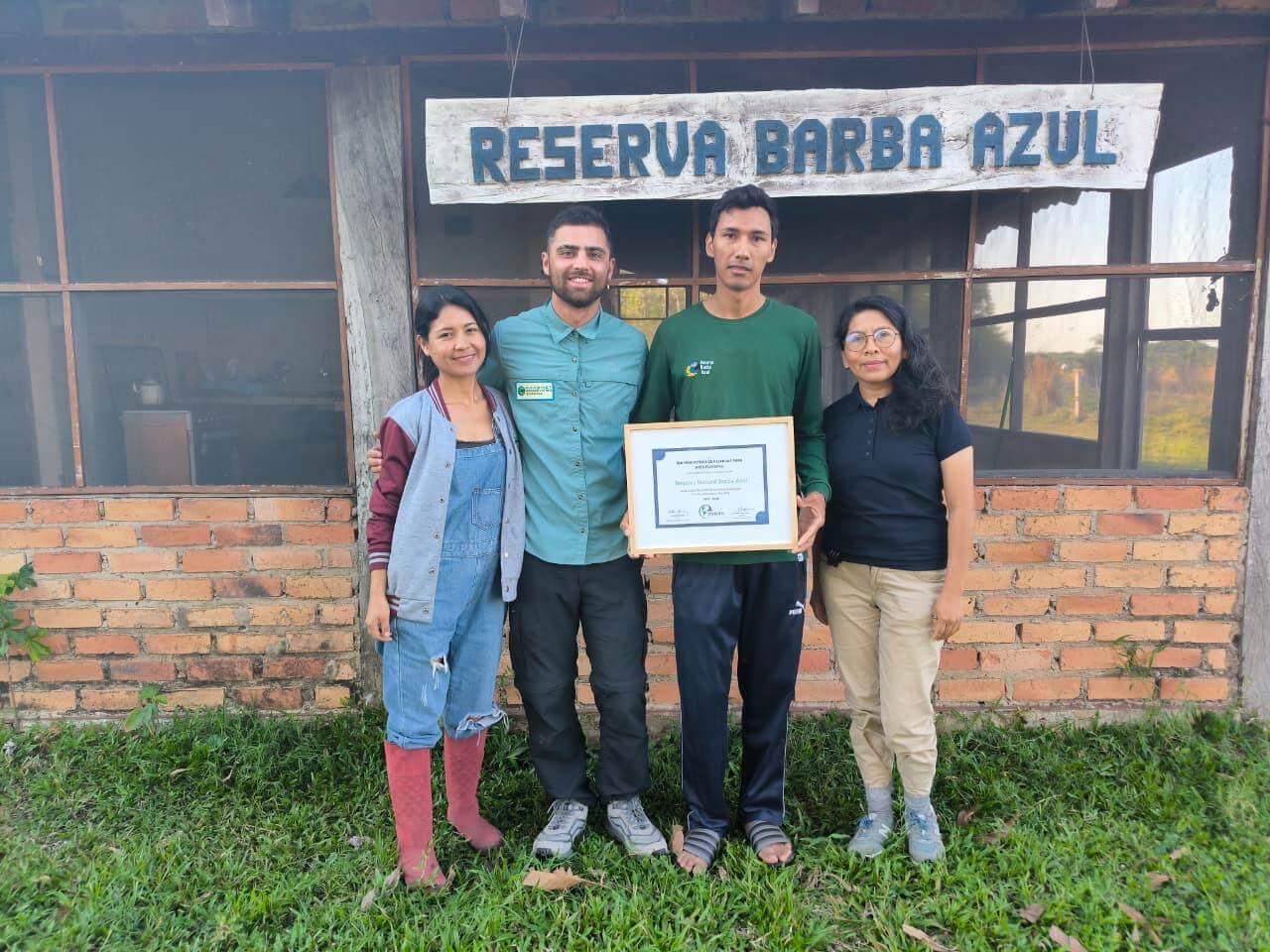
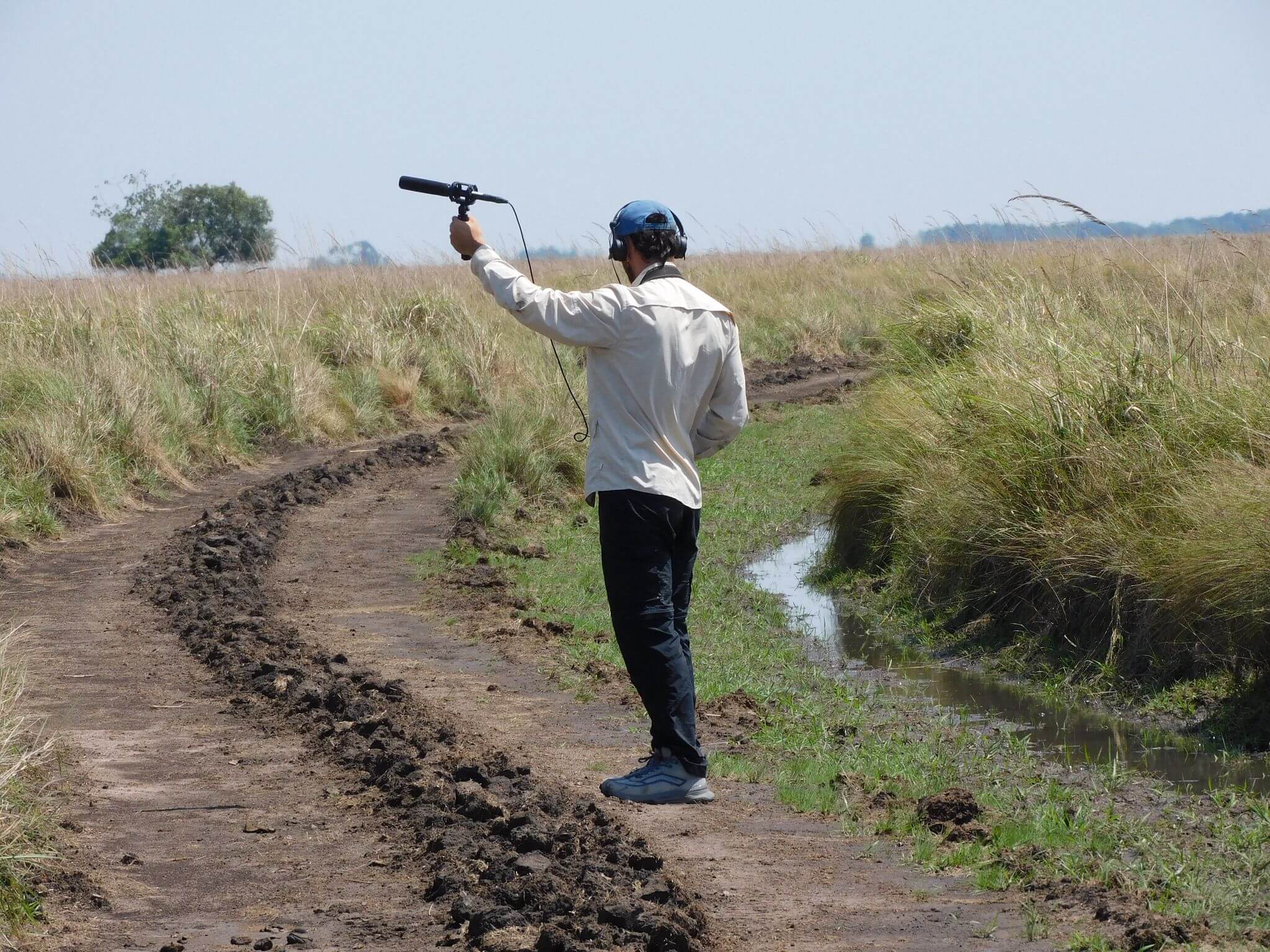
With over 4% of the global Buff-breasted Sandpiper (Calidris subruficollis) population migrating through Barba Azul, the reserve is undeniably a conservation priority site.
Photo: Jhulian Machuca Medina
“One of my first tasks at Barba Azul was leading the application to become a WHSRN site. Now, 10 years later, we’re seeing an increase in Buff-breasted Sandpipers using the seasonally flooded lowland grasslands—called ‘bajíos’—which we manage with our own cattle,” explains Tjalle Boorsma, Armonía’s Conservation Program Director. “Barba Azul is the only WHSRN site in Bolivia and a clear example of how sustainable land use can support the specific habitat needs of migratory birds.”
The results are promising. Grazing management in strategic sections of Barba Azul has encouraged the regeneration of short grasses in bajíos—wet grasslands near rivers and lagoons—that offer ideal foraging conditions for these migratory shorebirds. “In recent years, we’ve observed an increase in the presence of Buff-breasted Sandpipers in these well managed grazing habitats. It’s a clear example of how sustainable livestock use can be an effective conservation tool,” says Boorsma.
This innovative approach is also being expanded beyond the reserve’s boundaries. Through the Beni Ecofriendly Ranching Alliance—a joint initiative between Armonía and the Beni Ranchers’ Federation (FEGABENI)—a sustainable cattle ranching model is being promoted that conserves native grasslands without altering the landscape. This model stands in contrast to conventional ranching, which often leads to deforestation and biodiversity loss. In contrast, sustainable ranching in natural savannas shows it is possible to combine productive practices with the protection of critical habitats.

Sustainable ranching in natural savannas shows it is possible to combine productive practices with the protection of critical habitats.
Photo: Jhulian Machuca Medina
With more than 12,200 hectares (30146,8 acres) under effective protection, the work at Barba Azul demonstrates that conservation and production can go hand in hand. Ten years after joining WHSRN, the reserve reaffirms its commitment to protecting migratory shorebirds through nature-based solutions in collaboration with local producers.
The Western Hemisphere Shorebird Reserve Network (WHSRN) is not limited to coastal areas. Inland grasslands, temporary wetlands, and floodplains are key during the migration of many species. An assessment of all WHSRN sites using the REMAP tool identified 25 sites located in these landscapes, representing 25% of the sites evaluated at that time.
In South America, the WHSRN Executive Office and Manomet Conservation Sciences, together with local partners, promote sustainable management strategies in the grasslands of Argentina, Brazil, Bolivia, Colombia, and Uruguay, engaging producers, communities, and scientists. “The Barba Azul Reserve is a very inspiring example. Armonía and FEGABENI have shown that sustainable cattle ranching can become a strategic ally for shorebirds and for producers in the region,” highlights Nicolás Marchand, Specialist in Ranching and Shorebirds Conservation Specialist at the WHSRN Executive Office.
The experience developed in Beni aims at more profitable ranching, based on process technologies and efficient resource management. Through the Beni Eco-Friendly Ranching Alliance, it has been demonstrated that it is indeed possible to reconcile cattle production with the conservation of critical habitats, offering a viable path to protect biodiversity and sustain the local economy in the continent’s savannas.