

The Copper River Delta, a vast, tide-swept expanse of wetlands on Alaska’s southcentral coast, has marked 35 years as a Site of Hemispheric Importance in the Western Hemisphere Shorebird Reserve Network (WHSRN). Originally designated in 1990, the delta was the first WHSRN site in Alaska and among the earliest in the entire hemisphere. Up to 5 million birds stop here to rest and refuel on their journey north.
The milestone was recognized during the 35th Annual Copper River Delta Shorebird Festival, where hundreds gathered in Cordova to honor a legacy built on science, community partnerships, and long-term conservation. The festival offered a fitting tribute: four days of birding trips, youth programs, workshops, and celebrations that connected people to place, and to each other.
Each spring, the Copper River Delta hosts one of the world’s great wildlife spectacles. As many as five million migratory shorebirds converge on its intertidal flats, feeding and resting before continuing to Arctic breeding grounds. More than 20% of the global population of Western Sandpiper and Dunlin pass through the delta annually. This stopover is not just vital; it’s irreplaceable.
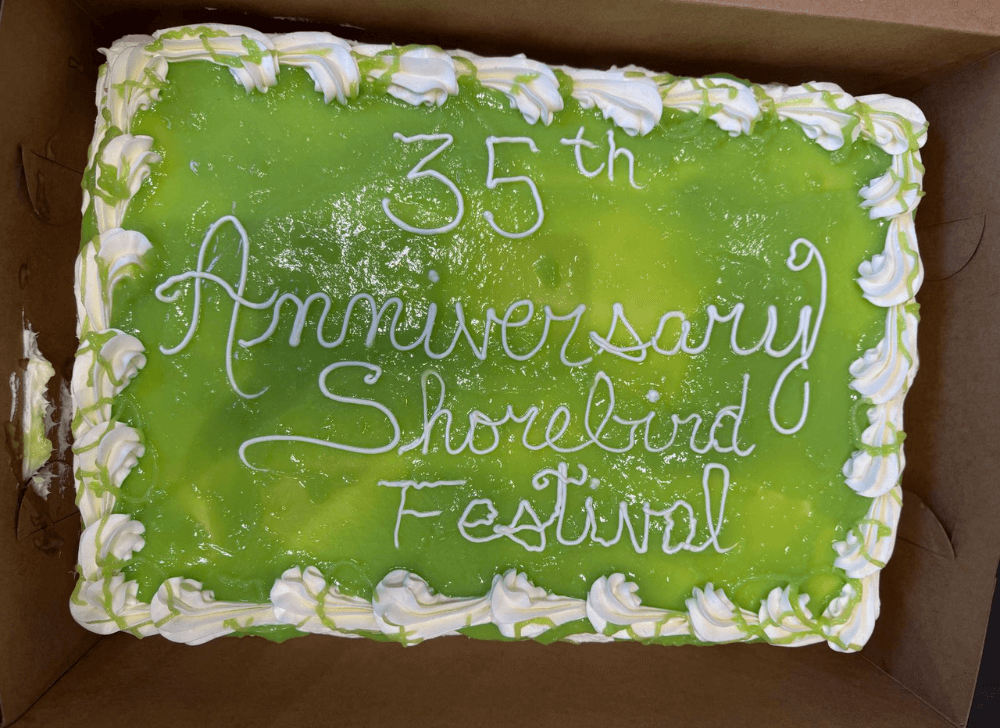
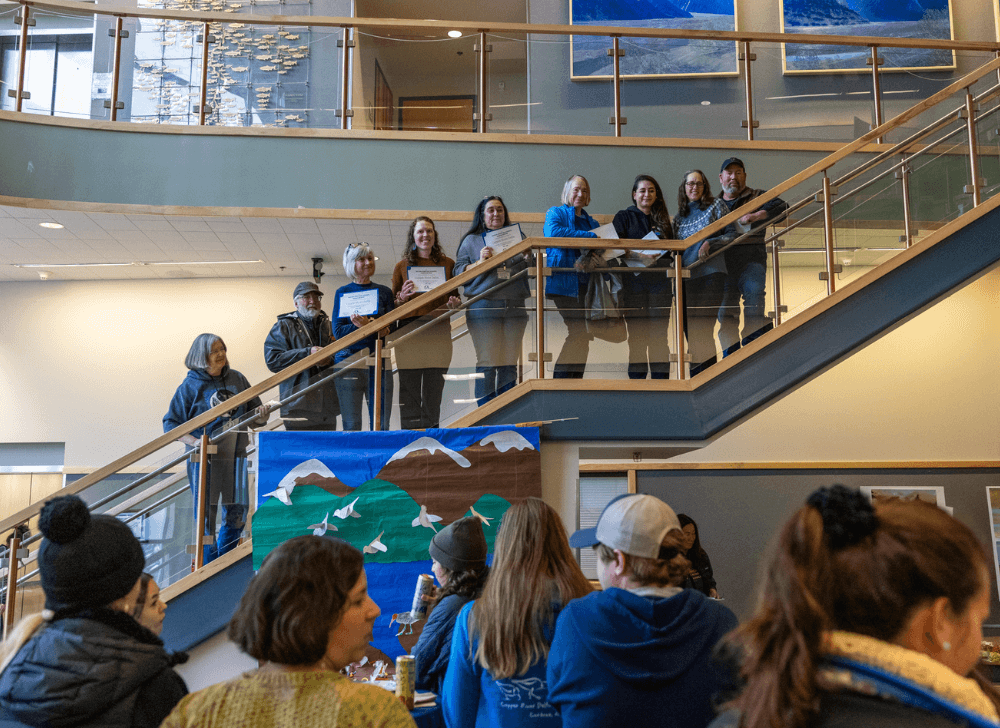
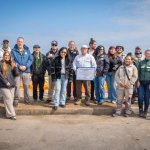
Left: There’s no celebration without cake. Photo: Erin Cooper. Right: Holding the commemoration certificate at the ceremony from left to right, Nancy Bird, Pete Mickelson, Kristin Smith, Jennel Larson-Temple, Jenn Youngblood, Mary Anne Bishop, Julia Salazar, River Gates, and Steve Namitz. Photo: Copper River Delta Shorebird Festival.
During a special ceremony at the festival, Julia Salazar, Salt and Shorebird Specialist for the WHSRN Executive Office, presented commemorative certificates to long-standing site partners: the mayor of Cordova, the U.S. Forest Service, the State of Alaska, Chugach Alaska Corporation, Prince William Sound Science Center, and Eyak Corporation. Each plays a role in stewarding the delta’s rich ecosystems, which also support salmon, waterfowl, moose, and countless other species.
“The Copper River Delta represents what is possible when science, tradition, and community come together,” Salazar said during the ceremony. She reflected on her own connection to Western Sandpipers, a species she has studied in the Gulf of Fonseca in Honduras. “It’s a truly special experience to see ‘my birds’ here near their breeding grounds and to know they are ‘your birds’ too.”
That message of shared responsibility and long-standing dedication came to life during a conversation Salazar had with Pete Mickelson, a former wetland biologist with the Chugach National Forest and one of the early advocates for the delta’s protection. Their short interview, recorded during the festival at the Prince William Sound Science Center, offered a personal lens into the history behind the WHSRN designation and the origins of the festival itself.
“I first came to Cordova in 1973,” Mickelson recalled, “and began working with Pete Islieb, the top birder in town at the time. We were seeing as many as 3,000 Western Sandpipers per minute flying into Hartney Bay. It was clear this place was extraordinary. That’s what led to the first surveys, the WHSRN designation, and eventually the festival in 1989.”
Mickelson helped launch the Prince William Sound Science Center that same year and served on its board for many years. From his home just outside town, he still logs daily bird counts and tracks changes in migration patterns. “The numbers have dropped since those early days, especially for Westerns and Dunlins, but we still see nearly five million birds pass through,” he said. “This is one of the most diverse shorebird stopovers on the entire Pacific coast—maybe even all the way down to Patagonia.”

The Copper River Delta is an expansive floodplain that presents many challenges for counting fish populations. Photo courtesy CRPWSMA
Mickelson’s reflections underscore a key theme of the anniversary: long-term conservation doesn’t happen by chance. It’s the result of decades of local knowledge, scientific observation, and community support all stitched together by people who remain committed to a place.
That perspective also drives scientists like Mary Anne Bishop, senior scientist at the Prince William Sound Science Center, who has worked in coastal Alaska for over 35 years. Bishop was also involved in the early surveys that helped demonstrate the delta’s importance and secure its WHSRN status. “Every field season brings surprises,” she said. “Even after decades of research, nature still teaches us something new.”
For the U.S. Forest Service and other local partners, the anniversary served as a reminder: conservation isn’t just about protecting habitat, it’s about building relationships that last.
As the celebration came to a close, the message was unmistakable: shorebird conservation doesn’t begin or end in one place. It lives in the connections we make across borders, the knowledge we share, and the decisions we make to protect what migratory birds and people need to thrive.
“This is more than a festival,” said Steve Namitz, District Ranger for the Cordova Ranger District. “It’s a celebration of the partnerships that keep this place thriving across agencies, cultures, and flyways. For 35 years, the Copper River Delta has been at the center of a story that stretches from Alaska to South America.”

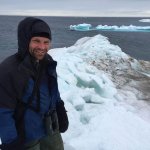
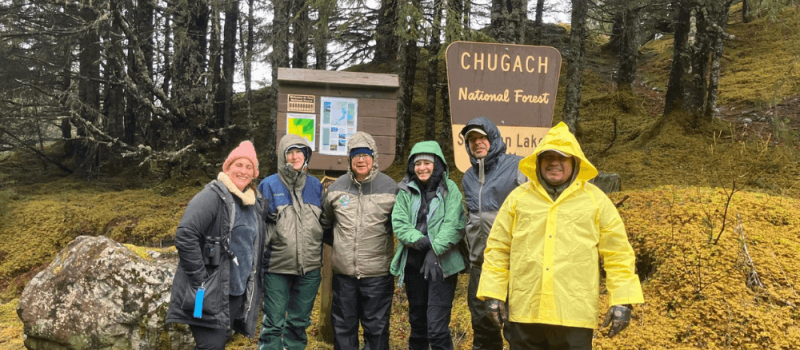
Julia Salazar suited up and ready to explore the wonders of Copper River Delta.
Cover Photo: Birdwatching in Cordova, Eyak River mouth Photo: Osvel Hijonosa.